Automotive-grade transient suppression for 12V rails
The 1.5KE13CAH: It clamps transients on 12V nominal supply lines, with an 11.1V reverse standoff voltage that keeps it out of conduction during normal operation and an 18.2V maximum clamping voltage that limits the spike seen by downstream electronics.
What the ratings mean for the BOM
The 11.1V reverse standoff voltage is the DC rail voltage the TVS will not conduct at — a 12V battery system typically sits at 13.8V under charge, so this part is intended for a regulated 12V bus, not a direct battery connection. The 12.4V minimum breakdown voltage guarantees the avalanche region starts before the rail exceeds normal tolerance. Clamping at 18.2V at the rated 86A peak pulse current means the TVS holds the transient below the 20-25V abs-max rating typical of 12V-rated ICs and modules. AEC-Q101 qualification adds the reliability screening and temperature cycling that automotive Tier-1s require for PPAP submission. The single bidirectional channel protects one signal or power pair; two unidirectional devices in anti-series would be needed for a dual-rail application.
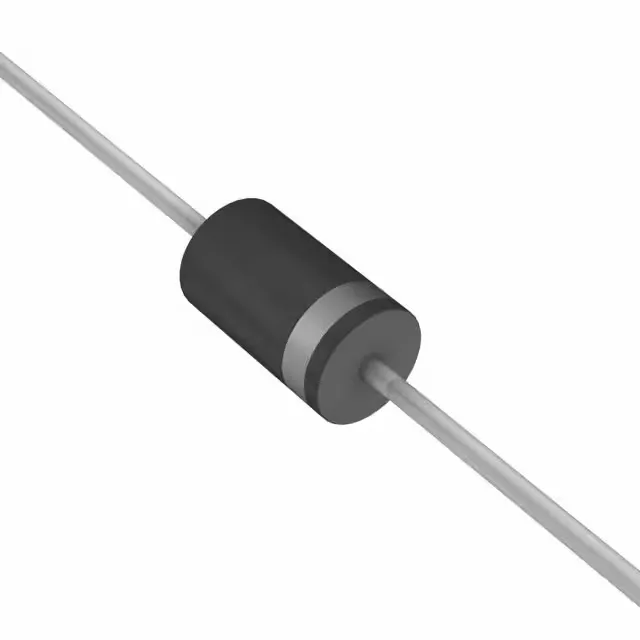
Housed in a DO-201AA (DO-27) axial-lead package, the 1.5KE13CAH is a through-hole part intended for point-to-point wiring or PCB mounting with 0.050-inch diameter lead holes on a 0.4-inch lead spacing. The axial body sits above the board — the leads absorb thermal expansion, so no special pad pattern is needed beyond the standard DO-201 footprint. Tape-and-reel packaging is the standard delivery format for automated insertion; the reel quantity is set by the manufacturer and confirmed at order. The base product number 1.5KE13 covers the whole 13V family; the 'CA' suffix identifies the bidirectional version, and the 'H' denotes AEC-Q101 automotive grade.