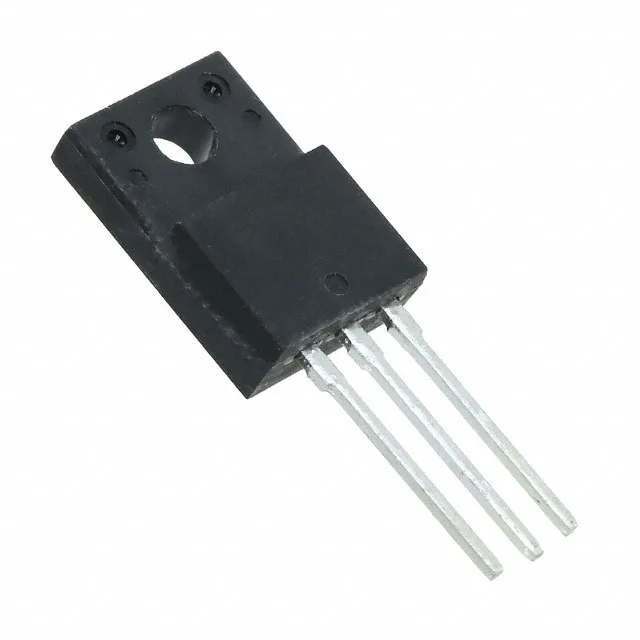
40 A per diode, 40 V blocking — common-cathode Schottky pair
The RB238T-40NZC9: Each diode handles 40 A continuously in the TO-220FN full-pack package — the isolated tab means no insulating pad or washer between the device and the heatsink, which simplifies thermal management in a power supply or OR-ing circuit.
Forward drop and reverse leakage at the operating point
Forward voltage is 800 mV maximum at 20 A per diode — the Schottky barrier keeps conduction losses lower than a pn-junction rectifier at this current class. Reverse leakage is 12 µA at the 40 V rated blocking voltage, which ROHM markets as 'super low IR' for this series; the leakage stays contained at the rated reverse bias, reducing standby dissipation in a continuous-conduction boost or flyback stage. The junction temperature ceiling is 150 °C, and the device is classified as a fast recovery type (under 500 ns, above 200 mA Io), so it recovers quickly enough for a 50–100 kHz hard-switched converter without significant reverse-recovery loss — the Schottky structure inherently lacks stored charge, but the speed classification confirms it for higher-frequency rectification.