3V fixed output, 150mA — what the dropout and PSRR mean for the rail
The BH30RB1WGUT-E2: The BH30RB1WGUT- is a fixed 3V positive-output LDO from ROHM, delivering up to 150mA from a 5.5V max input rail. The 0.15V dropout at 100mA means the input must stay above 3.15V to maintain regulation — a 3.3V rail with 200mV of ripple still has 150mV of headroom before the output falls out of spec. PSRR is 63dB at 1kHz — this attenuates 1mV of 1kHz ripple on the input to roughly 0.7µV at the output. For an analog front-end or a sensor bias rail where the upstream switching regulator's 1MHz fundamental is the dominant noise, the PSRR at that frequency will be lower than the 1kHz figure, so the board-level filter ahead of this LDO still matters.
72µA quiescent and protection features for always-on rails
Quiescent current is 72µA typical — this is the LDO's own draw when delivering no load. In a battery-powered sensor node that spends most of its life in a light-load state, this Iq dominates the standby power budget. The Enable pin (active-high) lets the system pull the rail to zero when the load is asleep, cutting the quiescent draw entirely. Built-in over-current and over-temperature protection means the LDO folds back or shuts down before the junction exceeds the silicon limit — useful when the load transient pushes past 150mA momentarily or the board sees a hot spot from an adjacent power device.
4-VCSP60N1 — board-fit and thermal reality
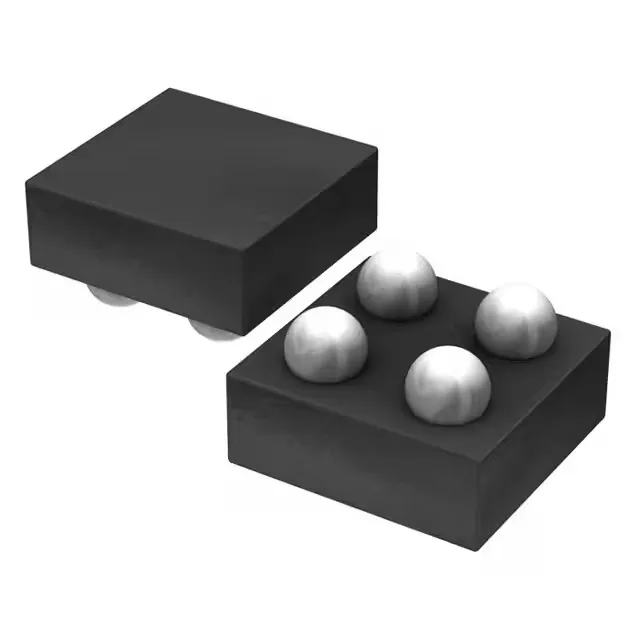
The 4-VCSP60N1 (1x1.04mm) is a wafer-level chip-scale package with solder balls on the bottom. Surface-mount assembly: the package is moisture-sensitive — a bake before reflow may be needed if the shelf life has been exceeded. The CSPBGA construction means the die is the package; handling with vacuum pick-and-place and a controlled reflow profile is standard.