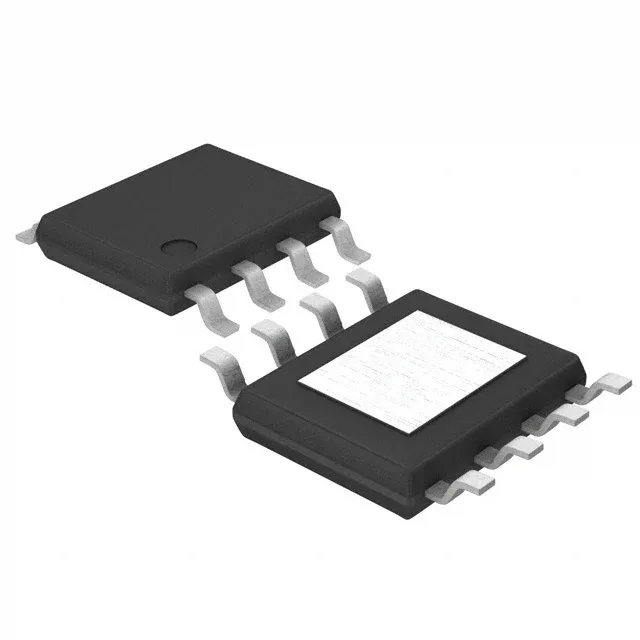
ROHM Semiconductor BD90610EFJ-CE2 — Discrete Semiconductors

ROHM BD90610EFJ-CE2 Buck Regulator, 1.25 A, AEC-Q100

MPNBD90610EFJ-CE2
End of Life

ROHM Semiconductor BD90610EFJ-CE2, Automotive AEC-Q100 step-down buck regulator, adjustable output, 1.25 A, 5-36 V input, 8-HTSOP-J package, Tape & Reel.

$2.28Ref. price · indicative, final on quote
Packaging8-SOIC (0.154", 3.90mm Width) Exposed Pad
RoHSROHS3 Compliant
SeriesAutomotive, AEC-Q100
Independent supplier — new & surplus stockAuthenticity-screened · ESD-safe packingListing updated Aug 2026

Specifications

BD90610EFJ-CE2 specifications
ParameterValue
SeriesAutomotive, AEC-Q100
Output typeAdjustable
MountingSurface Mount
Voltage - input36V
Voltage - output36V
Voltage - output (Min (Fixed))0.8V
Output current1.25A
Frequency - switching50kHz ~ 500kHz
I/O channels1
Operating temperature-40°C ~ 125°C (TA)
PackageTape & Reel (TR); Cut Tape (CT)
FunctionStep-Down
TopologyBuck
Case8-SOIC (0.154\", 3.90mm Width) Exposed Pad
Output configurationPositive
Synchronous rectifierNo

Product details

1.25 A automotive buck converter with wide input range

The ROHM BD90610EFJ-CE2 is a step-down (buck) switching regulator delivering 1.25 A continuous output from a 5 V to 36 V input rail, with an adjustable output down to 0.8 V.

Switching frequency and synchronous rectification

The switching frequency is programmable from 50 kHz to 500 kHz — a lower frequency reduces switching losses in the external diode (the part does not integrate synchronous rectification), while a higher frequency shrinks the inductor and output capacitor footprint. Because the BD90610EFJ-CE2 uses an external Schottky catch diode rather than a synchronous FET, the total efficiency depends on the diode forward voltage and the switching frequency trade-off; at 500 kHz the diode conduction losses dominate at light load.

The adjustable output uses an external resistor divider from the FB pin; the 0.8 V reference sets the minimum output, and the maximum output equals the input voltage minus the dropout of the internal switch.