Active production — what the AEC-Q100 grade means for the BOM
The BD50C0AWFP2-CE2: That -40°C to 125°C operating range covers under-hood and engine-bay environments where the ambient hits 105°C and the junction sees the rest.
1A output, 5V fixed — dropout and headroom
Rated for 1A continuous output with a fixed 5V rail. The 0.5V max dropout at 500mA means the input must stay above 5.5V at that load to keep regulation — at full 1A the dropout will be higher, so budget 1V headroom minimum for the input rail. The 55dB PSRR at 120Hz is the ripple rejection figure for full-wave-rectified mains noise. That's adequate for cleaning up a post-rectifier bus in an automotive module, but the PSRR rolls off above 1kHz — upstream switching noise from a DC-DC converter needs a pi-filter ahead of this LDO if the load is analog-sensitive. Quiescent current is 2.5 mA — not a micropower LDO, but fine for always-on modules where the load current is in the hundreds of milliamps and the Iq is a small fraction of the total draw.
TO-252-5 package — rework and board-fit
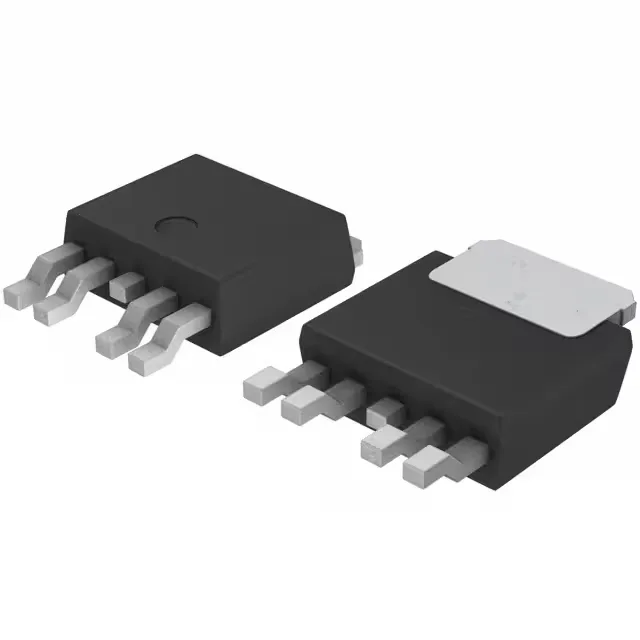
The TO-252-5 (DPak with 4 leads plus tab) is a surface-mount power package. The exposed tab is the main thermal path — the PCB copper area under it sets the junction-to-ambient thermal resistance. That tab is also the ground connection, so the layout needs a solid thermal via array to the inner ground plane. From a rework standpoint, the TO-252-5 is one of the friendlier power packages. The tab solders to the pad and the four leads are visible — no hidden joints. A hot-air station at 300°C with a shaped nozzle lifts the part cleanly if the board has been baked for moisture sensitivity.
Protection and control
Built-in over-current, over-temperature, and short-circuit protection mean the regulator survives a sustained output short without damage — it folds back current and thermal-cycles until the fault clears. The Enable pin lets a microcontroller or ignition signal gate the output, which is useful for sequencing multiple rails or shutting down a load in standby.