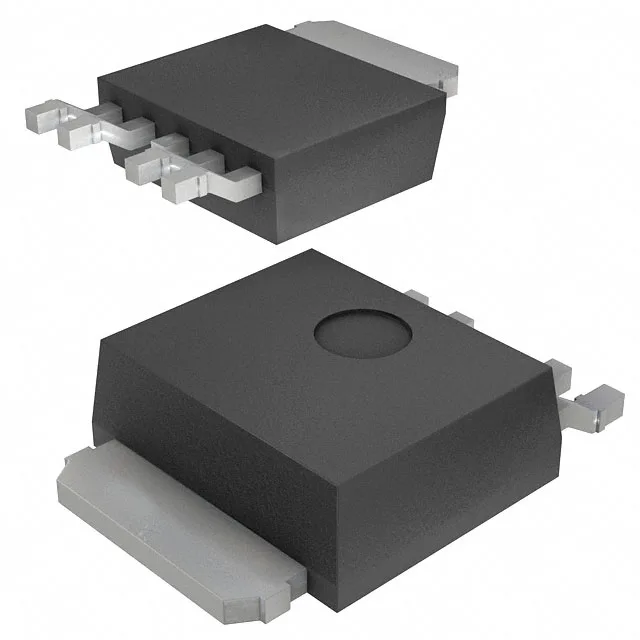
ROHM Semiconductor BD15KA5WFP-E2 — Analog & Data Acquisition

BD15KA5WFP-E2 LDO Regulator, 1.5V Fixed Output, 500mA

MPNBD15KA5WFP-E2
End of Life

ROHM BD15KA5WFP-, positive fixed-output LDO, 1.5V, 500mA, dropout 0.2V max at 200mA, PSRR 50dB at 120Hz, enable control, over-current/over-temperature protection, -40°C to 105°C, TO-252-5 surface-mount package.

$1.42Ref. price · indicative, final on quote
PackagingTO-252-5, DPak (4 Leads + Tab), TO-252AD
RoHSROHS3 Compliant
Independent supplier — new & surplus stockAuthenticity-screened · ESD-safe packingListing updated Jul 2026

Specifications

BD15KA5WFP-E2 specifications
ParameterValue
Output typeFixed
MountingSurface Mount
Voltage - input5.5V
Voltage dropout0.2V @ 200mA
Voltage - output (Min (Fixed))1.5V
Output current500mA
Current - supply550 µA
Current - quiescent550 µA
Operating temperature-40°C ~ 105°C
PSRR50dB (120Hz)
PackageTape & Reel (TR); Cut Tape (CT)
CaseTO-252-5, DPak (4 Leads + Tab), TO-252AD
Control featuresEnable
Protection featuresOver Current, Over Temperature, Soft Start
Number of regulators1
Output configurationPositive

Product details

1.5 V fixed LDO for low-voltage rails

The BD15KA5WFP-E2: The BD15KA5WFP- is a single-output positive LDO regulator delivering a fixed 1.5 V output at up to 500 mA. It is built for surface-mount assembly in the TO-252-5 (DPak) package, with the exposed tab providing the primary thermal path to the board. The part includes an enable pin for on/off control and integrates over-current and over-temperature protection with a soft-start feature to limit inrush during power-up.

The maximum dropout voltage is specified at 0.2 V with a 200 mA load. PSRR is 50 dB at 120 Hz.

The TO-252-5 (DPak) package has four leads plus a large tab.

Frequently asked questions

Is BD15KA5WFP- RoHS compliant and lead-free?

Yes, the BD15KA5WFP- is ROHS3 compliant, meeting the current EU restriction levels for lead and other hazardous substances.

Does BD15KA5WFP- require an external enable signal?

The part includes an enable control feature, so it can be turned on and off with an external logic signal. It does not require an external enable signal to operate — the enable pin can be tied to the input voltage for always-on operation.