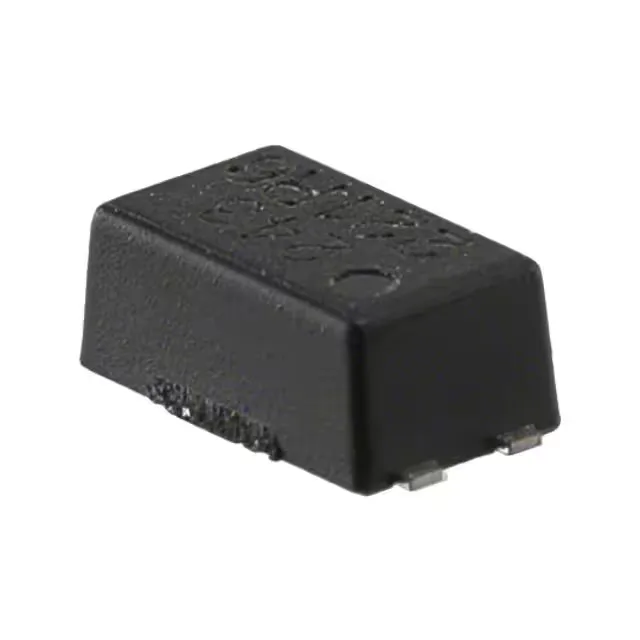
Panasonic Electric Works AQY221N2VY — Signal Relays

Panasonic AQY221N2VY PhotoMOS Relay, SPST-NO, 120 mA, 40 V

MPNAQY221N2VY
Active

Panasonic Electric Works PhotoMOS™ AQY series, SPST-NO (1 Form A) solid-state relay, 120 mA load current, 0 V ~ 40 V load voltage, 4-SSOP SMD package, Tape & Reel.

$5.5600Ref. price · indicative, final on quote
Sourced new & surplus through independent channelsAuthenticity-screened · ESD-safe packingListing updated Aug 2026

Specifications

AQY221N2VY specifications
ParameterValue
SeriesPhotoMOS™ AQY
Output typeAC, DC (RF)
MountingSurface Mount
Voltage - load0 V ~ 40 V
Voltage - input1.14VDC
Load current120 mA
CircuitSPST-NO (1 Form A)
PackageTape & Reel (TR); Cut Tape (CT)
Case4-SMD (0.175\", 4.45mm)
Termination styleSMD (SMT) Tab
On-State resistance12.5 Ohms

Product details

Signal relay for RF and low-level switching

The Panasonic AQY221N2VY is an SPST-NO (1 Form A) solid-state relay from the PhotoMOS™ AQY series, rated for 120 mA load current across a 0 V to 40 V load voltage range. Its output type is specified for both AC and DC, with an RF-capable designation — the 12.5 Ohm max on-state resistance and low input drive voltage of 1.14 VDC make it suited for switching small signals in test equipment, ATE pin electronics, and RF front-end bypass paths where a mechanical relay's contact bounce or lifetime limits are unacceptable.

Package and footprint fit

Housed in a 4-SSOP package (4-SMD, 0.175" body width), the AQY221N2VY occupies roughly 4.45 mm of board edge per side — a footprint that matches standard 4-pin SOP photocoupler and solid-state relay layouts. The SMD (SMT) Tab termination style means the device is reflow-solderable; the tape-and-reel option (TR) supports automated pick-and-place for volume builds.

Frequently asked questions

What is the on-state resistance and why does it matter?

Maximum on-state resistance is 12.5 Ohms. For a 120 mA load, this produces a voltage drop of 1.5 V across the relay — relevant when the downstream circuit has tight headroom or when signal attenuation in an RF path must be budgeted.