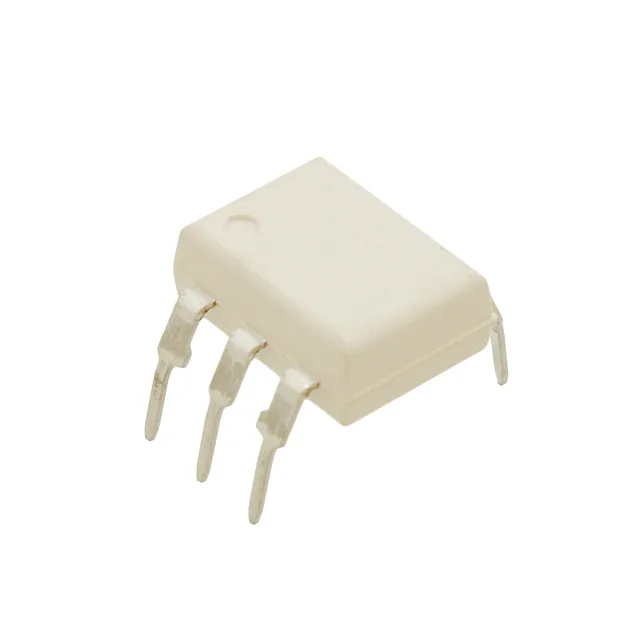
Zero-crossing triac output — the fit for resistive and phase-angle loads
The MOC3083TVM integrates a zero-crossing detection circuit that fires the internal triac near the AC line zero-crossing point. For a resistive load such as a heater or an incandescent lamp, this means the triac switches when the voltage across it is minimal, which keeps the inrush current and conducted EMI well below what a random-phase opto-triac produces. The zero-cross circuit is the main differentiator from the otherwise similar MOC3073M, which lacks it. With an 800 V off-state voltage rating and a minimum static dV/dt of 600 V/µs, the output stage holds off mains transients and fast-commutating edges from inductive loads without false triggering. The 600 V/µs figure is the key parameter for snubberless or low-snubber designs — it tells you the triac can tolerate the voltage slew rate from a motor contactor or a relay coil collapsing without needing an external RC network across its output.
Isolation barrier and safety certifications
The 4170 Vrms isolation rating in the 6-DIP package qualifies as reinforced-grade for mains-referenced control circuits. The approval agency listing includes UL and IEC/EN/DIN — the UL mark is the one most procurement and safety engineers check first for a mains-isolated opto-triac used in North American appliances or industrial drives.
Drive current and temperature range
Forward voltage is 1.3 V typical at 60 mA max DC forward current. The hold current (Ih) is 500 µA typical, which means the triac latches on with a low load current and does not drop out on a lightly loaded phase-angle dimmer. This covers outdoor enclosures, unheated warehouses, and engine-bay-adjacent compartments in commercial vehicles.