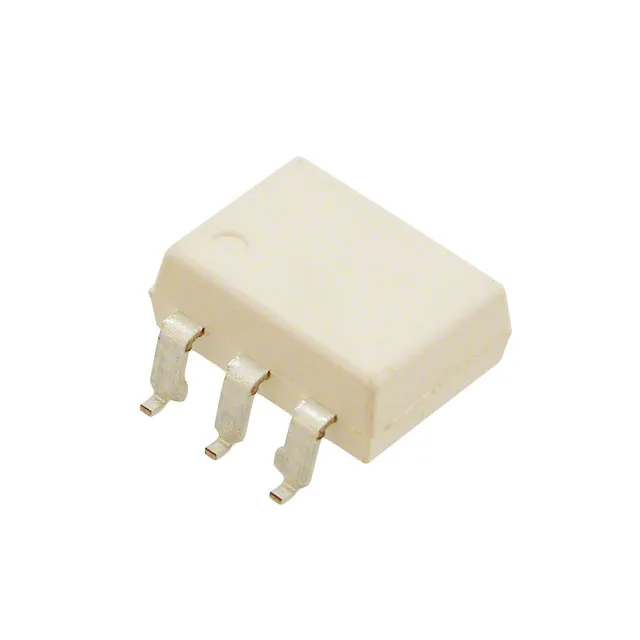
Triac-output optoisolator for AC load switching
The onsemi MOC3062SVM is a single-channel optoisolator with a triac output, designed to switch AC loads from a low-voltage logic or microcontroller signal. It provides 4170 Vrms of galvanic isolation between the LED input and the output triac, meeting IEC/EN/DIN and UL safety standards. The built-in zero-crossing circuit turns the triac on only near the AC line zero crossing, which reduces inrush current and electromagnetic interference when driving resistive or lightly inductive loads like heaters, solenoids, or solid-state relays.
Key ratings and what they mean for the BOM
The off-state output voltage is rated at 600 V, so the triac can block the peak of a 240 VAC or 277 VAC line with margin. The static dV/dt minimum is 600 V/µs, meaning the triac will not falsely trigger from fast voltage transients on the AC line — important in noisy industrial environments. The LED trigger current (Ift) is 10 mA maximum, and the forward voltage (Vf) is 1.3 V typical. The hold current (Ih) is 500 µA typical — once the triac is triggered, it latches on until the load current drops below this threshold near the AC zero crossing. This is standard for triac outputs and ensures clean commutation.
Housed in a 6-SMD gull-wing package (6-SMD), the MOC3062SVM is a surface-mount part with a 1.27 mm pitch footprint compatible with standard reflow soldering profiles. The gull-wing leads provide visual solder-joint inspection and some stress relief between the PCB and the package body. Supplied in tube packaging, it is suitable for hand assembly or low-volume pick-and-place with tube feeders. The tube protects the leads from bending during storage and handling.