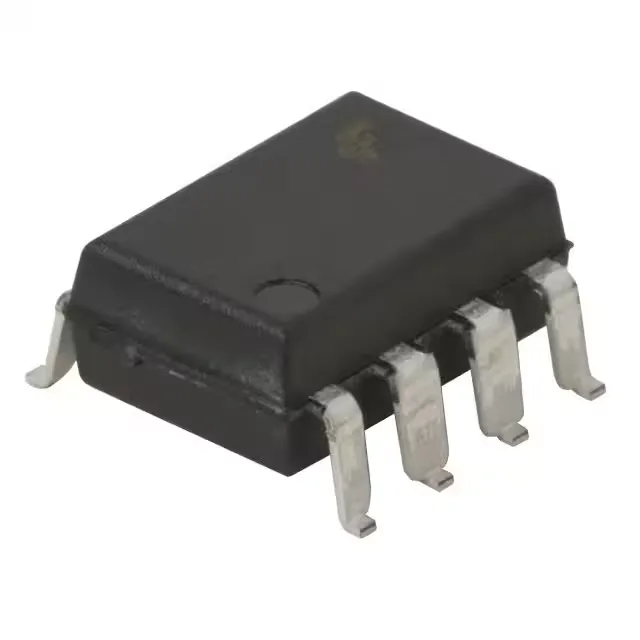
onsemi HCPL2731SM — Optoisolators

onsemi HCPL2731SM Optoisolator, 2-Ch Darlington, 5000Vrms

MPNHCPL2731SM
Active

onsemi HCPL2731SM Optoisolator, 2-Channel, Darlington Output, DC Input, 5000Vrms, 500% CTR min, 8-SMD Gull Wing, -40 to 100°C.

$1.0055Ref. price · indicative, final on quote
Packaging8-SMD, Gull Wing
Independent supplier — new & surplus stockAuthenticity-screened · ESD-safe packingListing updated Aug 2026

Specifications

HCPL2731SM specifications
ParameterValue
Input typeDC
Output typeDarlington
MountingSurface Mount
Voltage - isolation5000Vrms
Voltage - output18V
Voltage - forward (Vf)1.3V
Current - output (Channel)60mA
Current transfer ratio500% @ 1.6mA
Current - DC forward (If)20 mA
Operating temperature-40°C ~ 100°C
PackageBulk
Case8-SMD, Gull Wing
Channels2

Product details

2-channel Darlington optocoupler with 5000 Vrms isolation

The HCPL2731SM is a 2-channel Darlington-output optocoupler from onsemi, designed for isolating logic signals across a 5000 Vrms barrier. Each channel switches a Darlington pair that can sink up to 60 mA at 18 V, driven by a DC LED input at 1.3 V typical forward voltage. The minimum current transfer ratio of 500% at 1.6 mA forward current means the output can drive a logic gate or relay coil directly from a low-power microcontroller pin — the Darlington gain handles the load without an external transistor.

Surface-mount package and rework considerations

Housed in an 8-SMD Gull Wing package (8-SMD), the leads are exposed and easy to inspect after reflow. The Gull Wing profile lifts the body off the board, so cleaning flux from under the part is straightforward — no hidden solder balls to trap contamination. The part reworks cleanly with hot air at 260°C for 10 seconds; the leads wet quickly with standard SnPb or SAC305 paste.

Frequently asked questions

What is the minimum current transfer ratio of HCPL2731SM?

The minimum CTR is 500% at a forward current of 1.6 mA. This high gain allows the Darlington output to drive loads directly from a low-current logic signal.