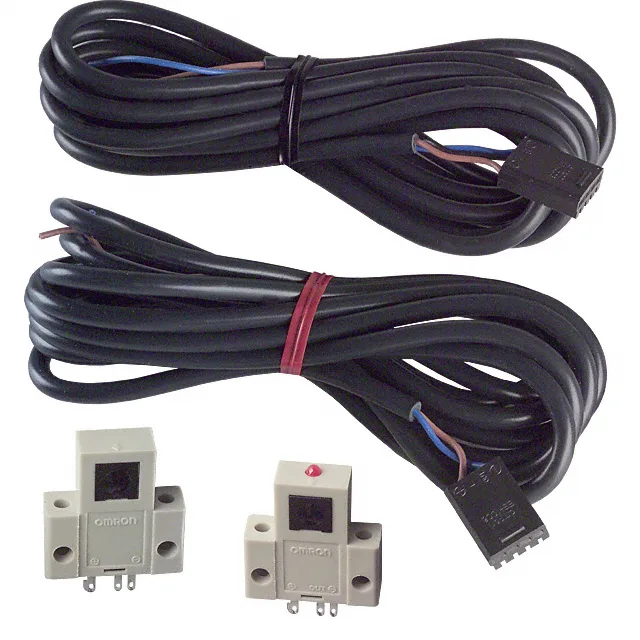
The Omron EE-SPW311 is a through-beam photoelectric sensor with a 1 m sensing distance, built around a 940 nm infrared LED. The emitter and receiver sit in separate housings, so the beam breaks when an object passes between them — reliable part-present detection on conveyors, gantries, and packaging machinery where the target is opaque enough to block IR. Output is NPN open-collector, Dark-ON logic: the transistor pulls low when the beam is uninterrupted, and goes high-impedance when the beam is blocked. That maps directly to a sinking PLC input card expecting a low signal for 'object present'. Supply is fixed at 5 VDC. The 1 ms response time keeps up with moderate-speed lines.
IP60 and temperature — where it lives
IP60 means dust-tight but no water protection. Fine for a dry control cabinet or a sheltered conveyor section; not for washdown zones, outdoor enclosures, or food-processing areas where hoses are used. The -10°C to 55°C operating range covers most heated factory floors but not freezers or unheated warehouses. Connector termination — no pigtail — so the sensor body swaps without pulling cable. If the existing harness has a mating connector, a field replacement is a plug-and-play job.
EE-SPW411 — same mounting, different output logic
The closest functional peer is the EE-SPW411. It shares the same 1 m through-beam range, 5 V supply, 1 ms response, connector termination, IP60 rating, and 940 nm IR LED. The single difference is output logic: the EE-SPW311 is Dark-ON (NPN pulls low when beam is made), while the EE-SPW411 is Light-ON (NPN pulls low when beam is broken). Swapping one for the other without changing the PLC program or wiring will invert the detection signal.