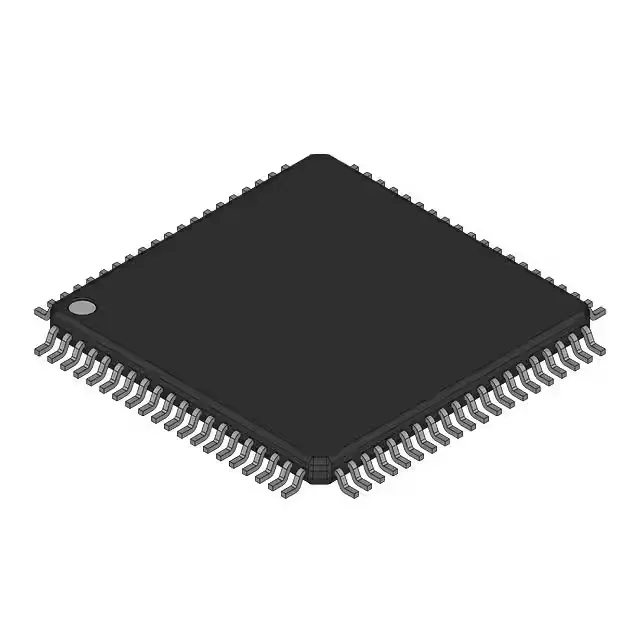
The NXP S9S12C128J2CFUE is a 16-bit HCS12 microcontroller clocked at 50 MHz, with 128 KB of Flash program memory and 4K x 8 of RAM. The part is housed in an 80-pin QFP (14x14 mm body) and operates from a 2.35 V to 2.75 V supply over the -40°C to 85°C industrial temperature range. Typical applications include automotive body electronics (non-safety-rated), industrial control nodes, and CAN-based sensor aggregation — anything that needs a proven 16-bit core with on-chip CAN and a moderate peripheral set.
On-chip CAN and peripheral mix
The CANbus module is the main differentiator here — it lets this MCU sit directly on a vehicle or industrial CAN network without an external transceiver (though you still need a CAN PHY). The SCI and SPI ports handle legacy UART and sensor/peripheral links. The 8-channel 10-bit ADC is adequate for reading potentiometers, temperature sensors, or current shunts at moderate update rates. POR, PWM, and WDT peripherals are on-die, reducing external component count.