ARM Cortex-M0+ at 48 MHz — processing budget for automotive body control
It carries 128 KB of Flash and 16 KB of RAM, sized for firmware stacks running CAN and LIN communication alongside local sensor processing.
The 128 KB Flash (128K x 8) provides room for application code, bootloader, and calibration tables typical of automotive body functions. The 16 KB RAM supports moderate-sized data buffers for CAN message queues and sensor data logging. If your application requires over-the-air firmware updates or large lookup tables, verify that the combined code and data footprint fits within these limits — this is the mid-range density tier of the KEA family.
The temperature grade is a key differentiator from commercial-range parts that would fail in these environments. Ensure your PCB layout and thermal management keep the junction temperature within this envelope during sustained operation.
Integrated CAN and LIN — protocol-level connectivity without external transceivers
For automotive body networks, the built-in CAN and LIN controllers handle the protocol layer directly; you still need external transceivers for the physical layer.
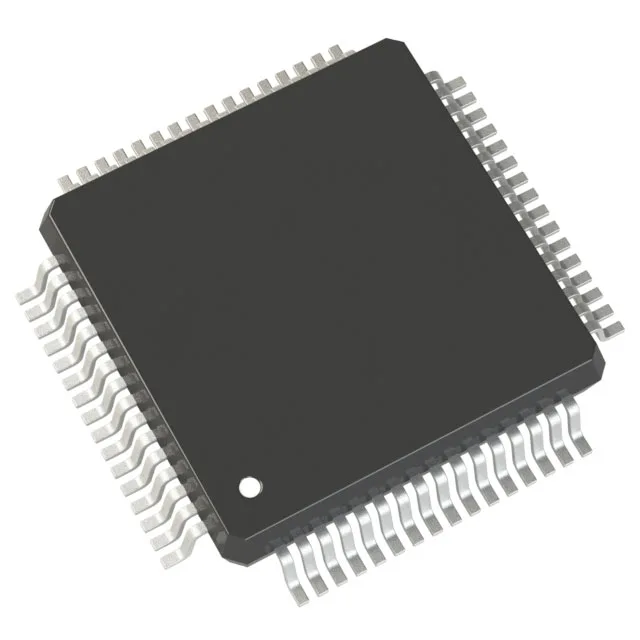
58 I/O in a 64-LQFP — pinout density for sensor and switch arrays
With 58 general-purpose I/O pins in a 64-LQFP package (10x10 mm), this MCU offers enough GPIO to handle a matrix of switches, LED indicators, and sensor inputs typical of automotive body controllers. The LQFP footprint is hand-solderable and inspectable, which helps during prototyping and low-volume production. The 64-pin count is a common density point; board layouts for this package are widely available.
Active lifecycle — no EOL risk for new designs
The ROHS3 compliance covers current regulatory requirements for most markets.