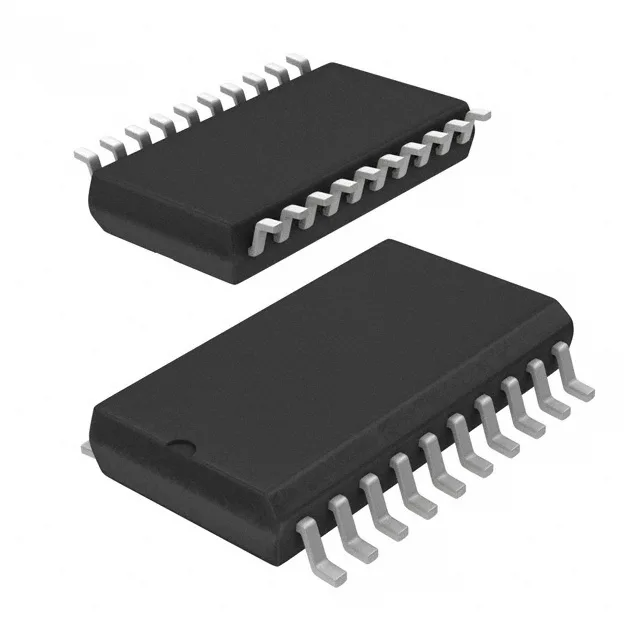
NXP Semiconductors PCF8584T/2,512 — Analog & Data Acquisition

NXP PCF8584T/2,512 I2C Bus Controller, 20-SOIC

MPNPCF8584T/2,512
End of Life

NXP PCF8584T/2,512 I2C bus controller, parallel interface, 1.5mA supply current, 4.5V to 5.5V supply range, -40°C to 85°C operating temperature, 20-SOIC package, Tube.

$6.77Ref. price · indicative, final on quote
Packaging20-SOIC (0.295", 7.50mm Width)
RoHSROHS3 Compliant
Sourced new & surplus through independent channelsAuthenticity-screened · ESD-safe packingListing updated Aug 2026

Specifications

PCF8584T/2,512 specifications
ParameterValue
Voltage4.5V ~ 5.5V
Current - supply1.5mA
ProtocolI2C
InterfaceParallel
Operating temperature-40°C ~ 85°C
PackageTube
FunctionController
Case20-SOIC (0.295\", 7.50mm Width)

Product details

I2C bus controller with a parallel port — what it bridges

The NXP PCF8584T/2,512 is an I2C bus controller that translates between a standard parallel microprocessor interface and the I2C serial bus. It handles all I2C bus timing and protocol, including clock generation, start/stop conditions, and arbitration, so the host processor only needs to read and write a few registers.

The 4.5V to 5.5V supply range ties this part to 5V logic families. It will not run from a 3.3V rail, so if your system has moved to lower voltages, you will need a level shifter or a separate 5V supply for this controller. The 1.5mA supply current is modest — fine for always-on buses in industrial controllers or set-top boxes, but not the lowest-power option for battery gear.

Lifecycle and sourcing — still an active line

Package and handling — 20-SOIC wide-body

The wide SOIC footprint is common for I2C controllers and interface ICs, and it is straightforward to hand-assemble or reflow. Standard MSL precautions apply — store the tubes in a dry environment if the seal is broken, and bake before reflow if the floor-life window has been exceeded.

Frequently asked questions

What is the PCF8584T used for?

The PCF8584T is an I2C bus controller with a parallel microprocessor interface. It is used to add I2C bus capability to systems whose host processor lacks a built-in I2C peripheral, or to offload I2C timing and protocol handling from the main CPU. Typical applications include industrial control, telecom infrastructure, and embedded systems that need to communicate with I2C sensors, EEPROMs, or other peripherals.