0.885 µA at 3.3 V — the battery-life spec that decides the BOM
The NXP PCF85263ATT/AJ is a real-time clock (RTC) in the Clock/Calendar family, communicating over an I²C (2-wire serial) bus. Its headline timekeeping current of 0.885 µA at 3.3 V is the figure that drives the battery-life calculation for portable or battery-backed designs — a 200 mAh coin cell running this RTC alone would last over 25 years on paper, so the real constraint becomes the battery's shelf life and self-discharge, not the chip. The supply range spans 0.9 V to 5.5 V on both the main Vdd and the battery backup pin, meaning it can run directly from a single Li-ion cell, a 3.3 V rail, or a 5 V industrial bus without a series regulator.
Integrated features that replace external ICs
Beyond keeping time in HH:MM:SS:hh (12/24 hr) and YY-MM-DD-dd format with leap-year compensation, this part packs an alarm comparator and a watchdog timer on-chip. The watchdog is a practical BOM saver in embedded systems that would otherwise need a separate supervisor IC to reset a hung microcontroller. The alarm output can be routed to a GPIO or interrupt line for wake events.
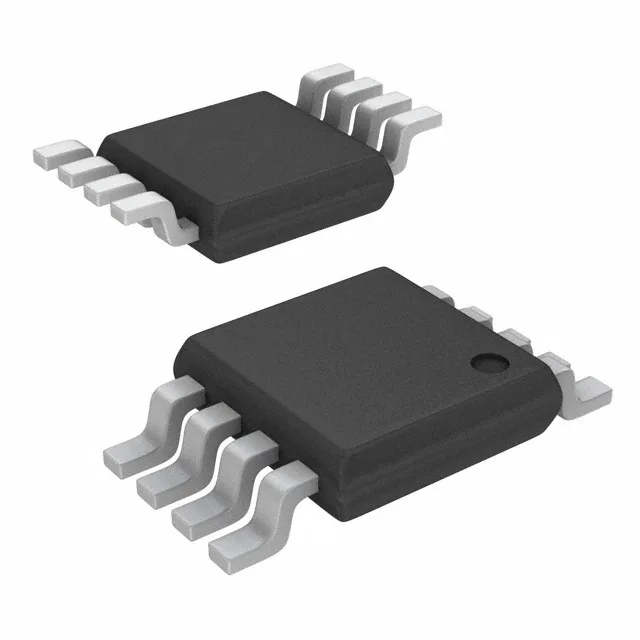
Package and mounting — 8-TSSOP footprint
No through-hole variant exists, so a reflow or wave-solder process is assumed. The 8-pin footprint is shared with several other NXP RTCs, which matters if you are qualifying a second source or planning a drop-in swap across a product family.
If you are filling a BOM line for a panel retrofit or a production run, the active status means you are not chasing surplus inventory or paying a premium for end-of-life stock.