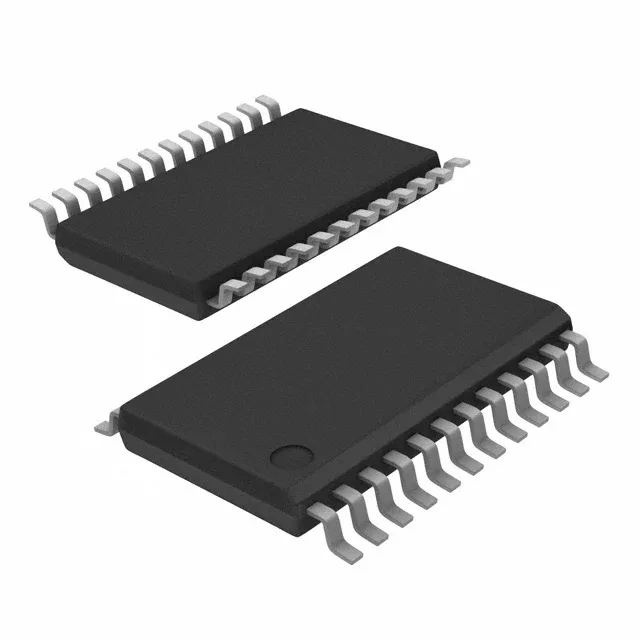
NXP Semiconductors PCA9547PW,118 — Logic ICs

PCA9547PW,118 I2C/SMBus Multiplexer, 24-TSSOP, Active

MPNPCA9547PW,118
End of Life

NXP PCA9547PW,118, 8-channel I²C/SMBus translating multiplexer, 24-TSSOP, dual supply 2.3–3.6 V / 4.5–5.5 V, surface mount, active lifecycle.

$2.48Ref. price · indicative, final on quote
Packaging24-TSSOP (0.173", 4.40mm Width)
RoHSROHS3 Compliant
Sourced new & surplus through independent channelsAuthenticity-screened · ESD-safe packingListing updated Aug 2026

Specifications

PCA9547PW,118 specifications
ParameterValue
MountingSurface Mount
Voltage2.3V ~ 3.6V, 4.5V ~ 5.5V
InterfaceI²C, SMBus
PackageTape & Reel (TR); Cut Tape (CT)
ApplicationsTranslating Multiplexer
Case24-TSSOP (0.173\", 4.40mm Width)

Product details

The NXP PCA9547PW,118 is an 8-channel I²C/SMBus translating multiplexer in a 24-TSSOP package. It lets a single I²C or SMBus master communicate with up to eight separate bus segments, each with its own pull-ups and address space, while providing voltage-level translation between the two supply domains. Typical applications include server motherboards, baseband controllers, multi-sensor arrays, and any design where I²C address conflicts or voltage-level mismatches need a clean hardware solution.

Dual supply — the decision parameter

That dual-domain architecture is what makes it a translating multiplexer — the logic-side voltage can be 3.3 V while the bus-side segments run at 5 V, or any combination within those windows. For a BOM engineer, this means one part handles both the channel expansion and the level shift, saving a separate translator IC and its associated PCB area.

Package and mounting — 24-TSSOP

Housed in a 24-TSSOP body measuring 4.40 mm wide, the PCA9547PW,118 is a surface-mount device intended for standard reflow assembly.

Frequently asked questions

How many I²C channels does PCA9547 have?

The PCA9547PW,118 provides eight independent I²C/SMBus channels, each with its own selectable bus segment. This allows one master to address up to eight distinct sub-buses, resolving address conflicts and enabling voltage-level translation per segment.