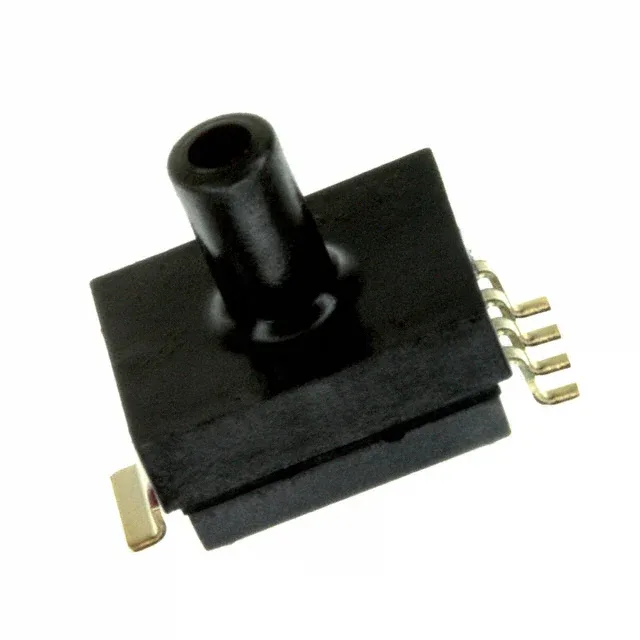
Bridge output and excitation
The MPXM2102AS: The sensor delivers a Wheatstone bridge output of 0 mV to 40 mV when excited at 10 V. This is a ratiometric signal — the full-scale span scales with the supply voltage, so a stable 10 V reference (or a regulated 10 V–16 V rail) is required to maintain measurement accuracy. The 40 mV span at 10 V means downstream amplification is needed before an ADC; a gain stage of 100–200× is typical to bring the signal into the 2–5 V range for a microcontroller ADC. This makes the sensor usable in engine-bay or outdoor enclosure applications where ambient swings exceed commercial-grade limits.
14.5 PSI absolute — low-pressure sensing
Rated for 14.5 PSI (100 kPa) absolute pressure, with a maximum overpressure of 58.02 PSI (400 kPa) before damage. Absolute sensing means the output is referenced to a sealed vacuum cavity, not to ambient — this is the right choice for barometric pressure, altitude measurement, or any application where the reference must be independent of local atmospheric changes. The 100 kPa full-scale covers sea-level barometric range (≈101 kPa) with some headroom. The port is a male barbless tube, 0.12" (2.97 mm) diameter, intended for push-on flexible tubing. No barb means the tubing relies on an interference fit or a clamp; for applications with vibration or pressure cycling, a small hose clamp or adhesive is recommended to prevent the tube from walking off the port.
Package and board integration
Housed in a 5-SMD Module with a top port (5-MPAK supplier package), the sensor mounts on the PCB with gull-wing leads. The top port design means the pressure inlet is on the component top side — the PCB must have a clearance hole or the sensor must sit at the board edge to allow tubing access. The 5-MPAK footprint is not a standard JEDEC outline; confirm the land pattern from NXP's package drawing before committing the board layout. Supplied in tube packaging, not tape-and-reel. For automated pick-and-place, verify that the tube orientation and lead bend are compatible with your feeder system; some lines require a manual tube-to-tray transfer for this package style.