What the dual-axis ±1.5g range means on the bench
The MMA6262QR2-FR is a dual-axis (X, Y) analog accelerometer with a ±1.5g full-scale range and a sensitivity of 800 mV/g. That 800 mV/g output means a 1g tilt on either axis produces an 800 mV shift at the analog output pin — easy to read with a 10-bit ADC on a 3.3V rail without external amplification. Bandwidth is 150 Hz, which covers tilt sensing, vibration monitoring, and basic motion detection. Operating temperature spans -20°C to 85°C — industrial ambient, not extended range. If the board sits in an enclosure that stays above freezing, this part is fine; for cold-start below -20°C or under-hood heat, look at the AEC-Q100 siblings in the MMA3204 series.
Package, footprint, and rework considerations
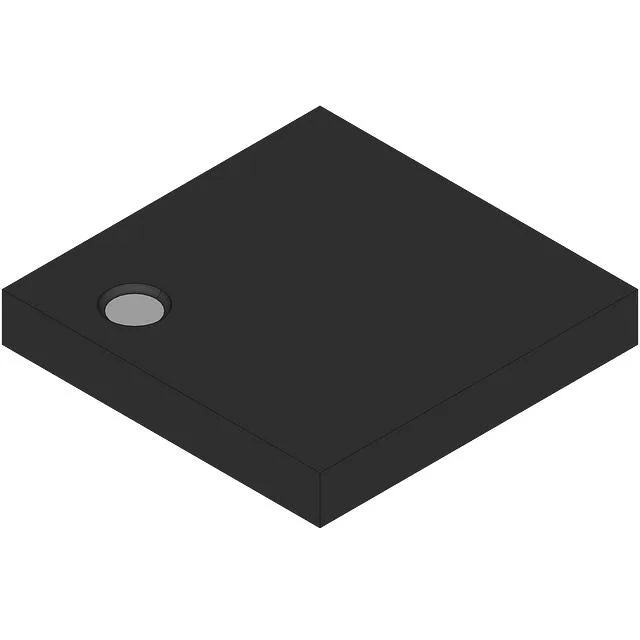
Housed in a 16-QFN with an exposed thermal pad (6x6 mm body). QFNs this size reflow well with a standard lead-free profile; hot-air removal is straightforward if the pad is pre-tinned. Mounting is surface-mount only — no through-hole variant. The exposed pad also acts as the primary thermal path, so the board layout should include thermal vias under the pad to spread heat into the inner layers.
Sourcing and lifecycle status
The closest peer in the same MMA6200 family is the MMA6263QR2, which shares the same ±1.5g range, 800 mV/g sensitivity, and 16-QFN package. The difference is bandwidth — the MMA6263QR2 is rated at 900 Hz versus 150 Hz on this part. If your application needs higher-frequency response (e.g., vibration analysis above 150 Hz), the MMA6263QR2 is a drop-in replacement on the same footprint and supply rails.