Active production — still a current NXP metrology MCU
The MKM14Z64ACHH5: ROHS3 compliant — no exemption issues for EU-market equipment. The part carries NXP's standard warranty and traceability through authorized supply.
Cortex-M0+ at 50 MHz — built for energy measurement
The ARM Cortex-M0+ core runs at 50 MHz, which is the computational ceiling for the on-chip metrology firmware. This is not a general-purpose MCU speed race — the KM series is optimized for the power-line cycle calculations that a 50/60 Hz energy measurement algorithm demands. The flash is single-cycle at 50 MHz for zero-wait-state code execution on most instructions. The dual ADC architecture is the standout feature for metrology: five 16-bit SAR channels for voltage/current waveform capture and four 24-bit sigma-delta channels for precision energy accumulation. The 24-bit converters handle the wide dynamic range of a residential or commercial meter — from standby current to full-load — without gain switching.
Package, supply, and temperature — board-fit constraints
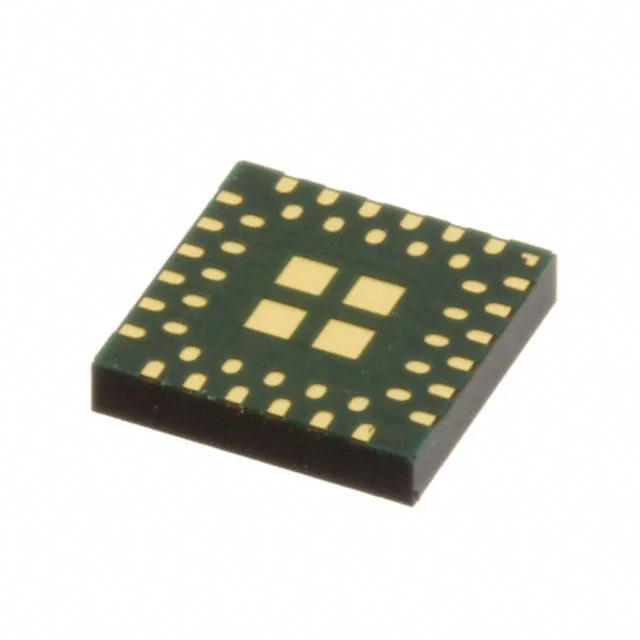
The package sits flush with the board; no seated height to account for in enclosure clearance. The wide range simplifies the power tree — no secondary LDO needed for the core.
Peripheral set and I/O — what connects to the bus
20 general-purpose I/O pins are available in the 44-pin package. On-chip peripherals include DMA and a watchdog timer. The DMA engine can move ADC conversion results directly to RAM without CPU intervention, freeing the Cortex-M0+ for communication and protocol handling. The WDT provides a safety net for unattended metering applications that must self-recover from firmware hangs.