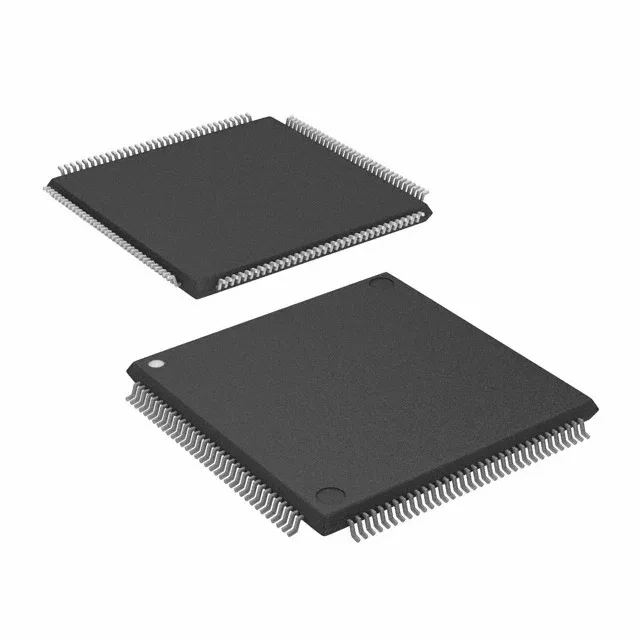
NXP Semiconductors MK60DX256VLQ10 — Discrete Semiconductors

NXP MK60DX256VLQ10 Kinetis K60 MCU, 100MHz, 256KB Flash

MPNMK60DX256VLQ10
End of Life

NXP Kinetis K60 series, ARM Cortex-M4, 32-bit MCU, MK60DX256VLQ10, 100MHz, 256KB Flash, 64K x 8 RAM, 4K x 8 EEPROM, 42x16b ADC / 2x12b DAC, CAN, Ethernet, USB OTG, -40°C to 105°C, 144-LQFP.

$19.22Ref. price · indicative, final on quote
Packaging144-LQFP
StockContact for availability
MOQ1 pcs
  • 100% new & originalTraceable channels only — no refurbs, no pulls, no remarked parts.
  • Date & lot codes on quoteStated per line before you commit; label photos on request.
  • MSL-compliant ESD packingMoisture-sealed bags with indicator cards; reels photo-verified.
  • PayPal buyer protectionPay by T/T, PayPal or Payoneer — card payments covered end to end.

Specifications

MK60DX256VLQ10 Technical Specifications
ParameterValue
SeriesKinetis K60
Mounting typeSurface Mount
Oscillator typeInternal
Program memory typeFLASH
Voltage - supply (Vcc (Vdd))1.71V ~ 3.6V
Operating temperature-40°C ~ 105°C (TA)
Speed100MHz
PackageTray
RAM size64K x 8
Core size32-Bit Single-Core
EEPROM size4K x 8
PeripheralsDMA, I²S, LVD, POR, PWM, WDT
ConnectivityCANbus, EBI/EMI, Ethernet, I²C, IrDA, SD, SPI, UART/USART, USB, USB OTG
Number of i (O)100
Core processorARM® Cortex®-M4
Case144-LQFP
Data convertersA/D 42x16b; D/A 2x12b
Program memory size256KB (256K x 8)

Product details

100 MHz Cortex-M4 with integrated Ethernet and CAN — what this MCU brings to an industrial BOM

The NXP MK60DX256VLQ10 is a 32-bit ARM Cortex-M4 MCU from the Kinetis K60 series, clocked at 100 MHz with a single core. It packs 256 KB of Flash program memory, 64K x 8 RAM, and 4K x 8 EEPROM on-chip. Connectivity is the strong suit here: CANbus, Ethernet, USB OTG, plus I²C, SPI, UART/USART, and an external bus interface (EBI/EMI). That means this single MCU can serve as a fieldbus node (CAN), a plant-network gateway (Ethernet), and a local programming/debug port (USB) — no extra bridge chips. The operating temperature range of -40°C to 105°C covers industrial enclosures, outdoor telecom cabinets, and under-hood automotive auxiliary modules.

256 KB Flash and 100 MHz — sizing the firmware and timing budget

At 100 MHz, the Cortex-M4 delivers compute headroom for a real-time control loop plus a TCP/IP stack and CANopen application. The 256 KB Flash is sized for a mid-complexity firmware image.

Active lifecycle — no LTB exposure for production builds

The MK60DX256VLQ10 carries an Active product status with ROHS3 compliance. There is no last-time-buy notice or NRND flag on this part. For a production BOM that needs a multi-year supply horizon, this MCU is a safe selection.

144-LQFP — board layout and rework considerations

The 144-LQFP package with a 20x20 mm body is a standard fine-pitch QFP. It is hand-solderable with a fine tip and flux, and rework with hot air is straightforward.

Frequently asked questions

What is the price of MK60DX256VLQ10?

Pricing is market-driven and varies with quantity and delivery timeline. Request a quote through the RFQ form; a firm price will be provided based on the current sourcing landscape.

Is MK60DX256VLQ10 available via RFQ confirmation?

Stock levels change daily. The part is available through our sourcing network — submit an RFQ to check current inventory and get a delivery commitment.

What is the lead time for MK60DX256VLQ10?

Lead time depends on factory backlog and distributor stock at the time of order. A quote request will return the best available lead time for your required quantity.

What is the difference between MK60DX256VLQ10 and MK60DX128VLQ10?

The MK60DX256VLQ10 has 256 KB Flash and 64K x 8 RAM, while the MK60DX128VLQ10 has 128 KB Flash and a smaller RAM array. Both share the same 144-LQFP package, pinout, and peripheral set — the Flash and RAM size are the only differences, making the 256 KB version the drop-in upgrade for firmware that needs more code space.

Does MK60DX256VLQ10 have CAN bus support?

Yes, the MK60DX256VLQ10 includes a CANbus interface as part of its connectivity block, alongside Ethernet, USB OTG, I²C, SPI, UART/USART, and an external bus interface.