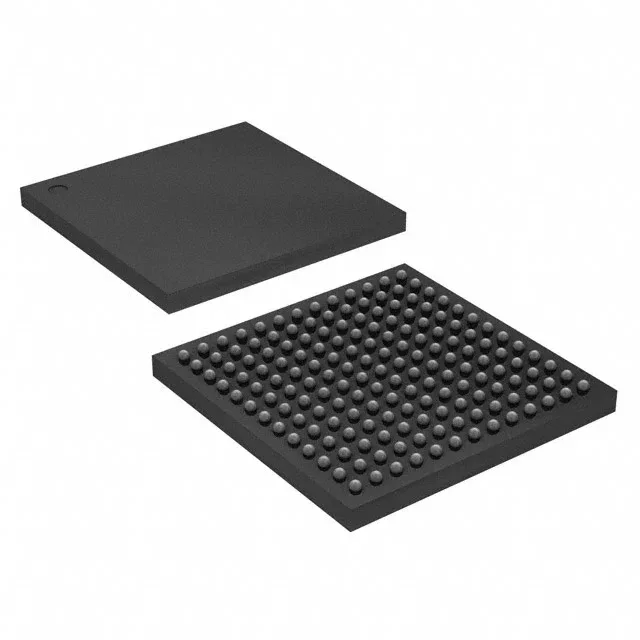
The NXP MCIMX233DJM4C is a single-core ARM926EJ-S application processor from the i.MX23 family, clocked at 454 MHz. It integrates a USB 2.0 PHY, a DRAM controller, and display interfaces for LCD and touchscreen — a single-chip compute engine for cost-sensitive embedded systems like e-readers, industrial panels, and human-machine interfaces.
Key features that drive the BOM
The integrated USB 2.0 PHY saves an external transceiver and its associated routing — one less chip, one less USB-specific crystal on the bill. The DRAM controller supports standard DRAM, so you are not locked into a narrow memory type. The LCD and touchscreen controller offloads display management from the core, freeing the ARM926 for application code. I/O voltage flexibility spans 2.0 V, 2.5 V, 2.7 V, 3.0 V, and 3.3 V, which lets the processor sit on a mixed-voltage board without extra level shifters for the memory and peripheral buses. Security features include a hardware cryptography engine and a unique hardware ID — useful for secure boot, firmware authentication, and device identity in payment or access-control terminals.
Reflow profile needs a top-side preheat soak to avoid cold joints on the centre balls.
Rated for -10°C to 70°C ambient — a commercial temperature grade. This part belongs in indoor, climate-controlled equipment: office terminals, consumer appliances, indoor kiosks. Not rated for automotive under-hood, outdoor telecom cabinets, or factory-floor environments that see freezing or sustained heat above 70°C.