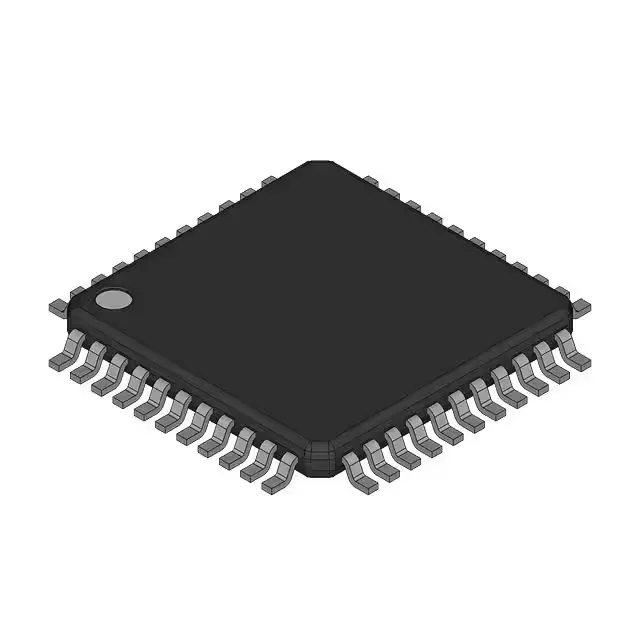
NXP Semiconductors MCF51JM128EVLD — Microcontrollers & Processors (MCU / MPU / DSP)

NXP MCF51JM128EVLD MCU, ColdFire V1, 50MHz, 128KB Flash

MPNMCF51JM128EVLD
End of Life

NXP MCF51JM series 32-bit ColdFire V1 MCU, MCF51JM128EVLD, 50 MHz, 128 KB Flash, 16 KB RAM, USB OTG, 44-LQFP.

$13.22Ref. price · indicative, final on quote
Packaging44-LQFP
SeriesMCF51JM
Independent supplier — new & surplus stockAuthenticity-screened · ESD-safe packingListing updated Aug 2026

Specifications

MCF51JM128EVLD specifications
ParameterValue
SeriesMCF51JM
MountingSurface Mount
Oscillator typeExternal
Program memory typeFLASH
Voltage - supply (Vcc (Vdd))2.7V ~ 5.5V
Operating temperature-40°C ~ 105°C (TA)
Speed50MHz
PackageBulk
RAM size16K x 8
Core size32-Bit Single-Core
PeripheralsLVD, PWM, WDT
ConnectivityI²C, SCI, SPI, USB OTG
Number of i (O)33
Core processorColdfire V1
Case44-LQFP
Data convertersA/D 8x12b
Program memory size128KB (128K x 8)

Product details

ColdFire V1 at 50 MHz with USB OTG — the BOM-fit for a mixed-signal control path

The MCF51JM128EVLD: The USB OTG peripheral means this part can act as either a device or a limited host — useful when the target system needs to plug into a PC for firmware updates but also read a USB flash drive in standalone mode.

Industrial temperature grade and peripheral set for a sensor-driven design

The 8-channel 12-bit ADC and built-in PWM timer cover the analog front-end and pulse-width modulation for a closed-loop control application — a BLDC fan controller or a PFC stage, for example. With 33 GPIOs in a 44-LQFP package, the pin density is moderate — the 0.8 mm pitch fan-outs on a two-layer board without micro-vias, keeping the PCB cost down.

Frequently asked questions

What is the MCF51JM128EVLD's core architecture and speed?

It uses a 32-bit ColdFire V1 core clocked at 50 MHz. This is a single-core, single-issue architecture with a hardware multiply-accumulate unit — suited for control-loop math but not for DSP-heavy workloads.

Does the MCF51JM128EVLD have a USB interface?

Yes, it integrates a USB OTG controller that supports both device and host roles. The PHY is on-chip, so only the USB connector and a series termination resistor are needed on the board.