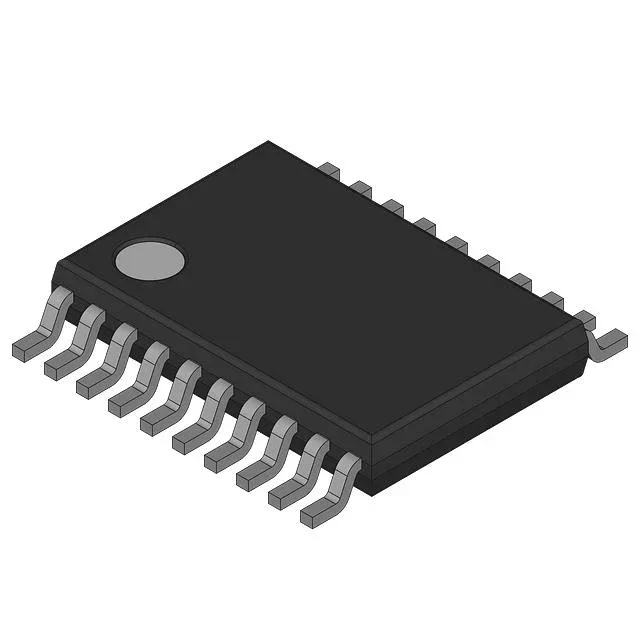
AEC-Q100 octal buffer for the 5V automotive bus
The part is organised as two elements of four bits each, with each element having its own output enable (active-low), giving independent control over the two nibbles.
125°C junction — the spec that decides the fit
Standard 74HCT240 parts in the same 20-TSSOP package are typically rated to 85°C or 105°C. The 125°C rating means this part can sit on a PCB near a hot engine block, inside a transmission ECU, or in a under-hood module where ambient temperatures regularly exceed 100°C.
20-TSSOP — footprint and layout reality
The 20-TSSOP package has a 4.40mm body width and 0.65mm pin pitch. This is the narrower TSSOP-20 variant, not the 6.40mm-wide SOIC-20 or the 5.30mm SSOP-20. If your existing PCB has a footprint for a standard 74HCT240D (SOIC-20), this part will not fit without a layout change. The surface-mount package is MSL 1 by default for Nexperia 74HCT logic, so no pre-bake is needed before reflow as long as the moisture barrier bag is intact — check the lot-specific label if the parts have been in storage.
The 6mA sink and 6mA source capability at 5V is typical for HCT logic. It drives one or two standard LSTTL loads or a CMOS input with plenty of margin, but it will not drive a 50-ohm backplane or a long cable directly. If the output needs to fan out to more than four or five CMOS loads, or if the trace length exceeds about 15 cm on a standard FR4 board, buffer the output with a higher-drive part or add a line driver stage. For on-board bus isolation between two 5V domains inside the same ECU, the 3-state outputs let you disconnect the bus when the module is in sleep mode, cutting leakage through the logic chain.
It is a current-production automotive-grade part from Nexperia, not an NRND or EOL line. There is no official successor announced because none is needed — the part is still in the active portfolio.