The NXP LPC4313JET100E pairs a 204 MHz Cortex-M4 with a Cortex-M0 companion core, giving you a dedicated real-time task engine alongside the main application processor. The M4 handles the math-heavy control loop or communication stack; the M0 offloads housekeeping like ADC scanning, I2C polling, or CAN message filtering. That split keeps the main loop deterministic without a separate CPLD or small MCU on the board. 512 KB of Flash and 104 KB of RAM are enough for a moderate industrial protocol stack (CANopen, Modbus TCP) plus a motor-control or sensor-fusion algorithm. The 16 KB EEPROM block stores calibration constants and fault logs without external serial EEPROM. The 100-TFBGA (9x9 mm) package keeps the footprint small, but it is a fine-pitch BGA — plan for X-ray inspection and controlled reflow. Not a hand-solder candidate for prototype work.
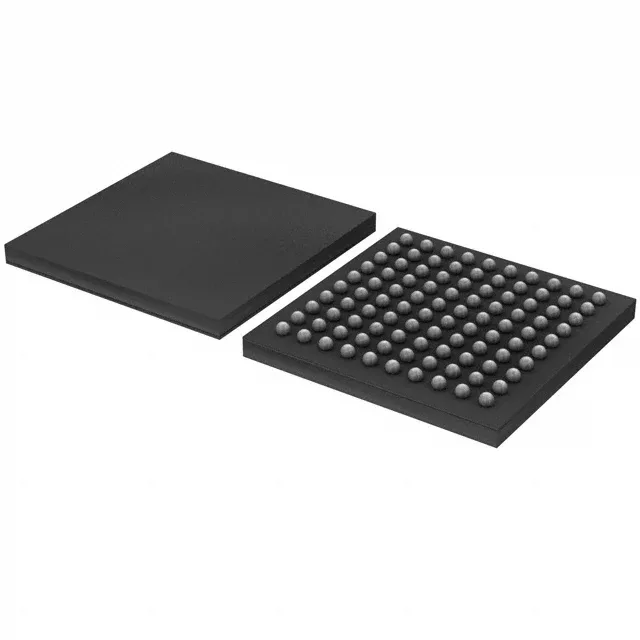
NXP LPC4313JET100E Dual-Core MCU, 204MHz, 512KB Flash, 100-TFBGA
MPNLPC4313JET100E
Active
NXP LPC43xx series LPC4313JET100E, 32-Bit Dual-Core ARM Cortex-M4/M0, 204MHz, 512KB Flash, 104K x 8 RAM, 49 I/O, CANbus, SPI, I2C, UART, 10-bit ADC/DAC, 100-TFBGA, -40 to 105°C, 2.2–3.6V.
$12.0560Ref. price · indicative, final on quote
Independent supplier — new & surplus stockAuthenticity-screened · ESD-safe packingListing updated Jul 2026
Specifications
| Parameter | Value |
|---|---|
| Series | LPC43xx |
| Mounting | Surface Mount |
| Oscillator type | Internal |
| Program memory type | FLASH |
| Voltage - supply (Vcc (Vdd)) | 2.2V ~ 3.6V |
| Operating temperature | -40°C ~ 105°C (TA) |
| Speed | 204MHz |
| Package | Tray |
| RAM size | 104K x 8 |
| Core size | 32-Bit Dual-Core |
| EEPROM size | 16K x 8 |
| Peripherals | Brown-out Detect/Reset, DMA, I²S, POR, WDT |
| Connectivity | CANbus, EBI/EMI, I²C, IrDA, Microwire, SD, SPI, SSI, SSP, UART/USART |
| Number of i (O) | 49 |
| Core processor | ARM® Cortex®-M4/M0 |
| Case | 100-TFBGA |
| Data converters | A/D 4x10b; D/A 1x10b |
| Program memory size | 512KB (512K x 8) |
Product details
Frequently asked questions
What is the package type of LPC4313JET100E?
The LPC4313JET100E is supplied in a 100-TFBGA (9x9 mm) package — a fine-pitch BGA requiring controlled reflow assembly.
What is the operating temperature range of LPC4313JET100E?
The LPC4313JET100E is rated for -40°C to 105°C ambient, covering industrial and extended-temperature environments.