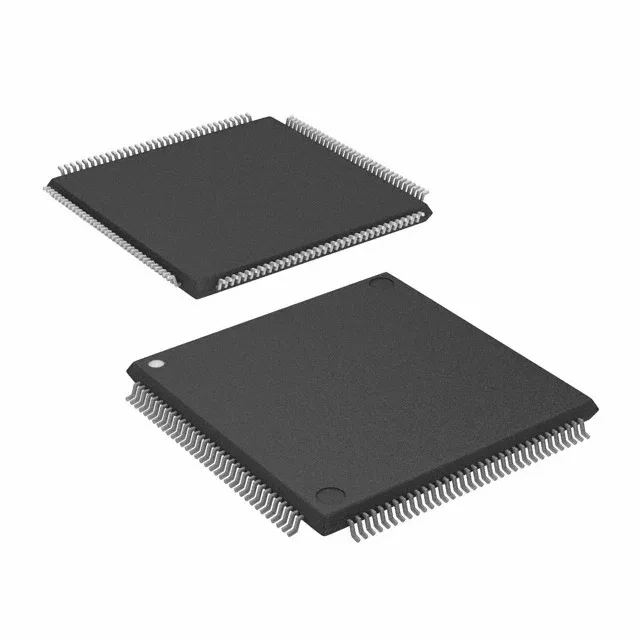
NXP USA Inc. LPC18S10FBD144E — Microcontrollers & Processors (MCU / MPU / DSP)

NXP LPC18S10FBD144E ARM Cortex-M3 MCU, 180MHz, 144-LQFP

MPNLPC18S10FBD144E
Active

NXP LPC18xx series, ARM Cortex-M3, 32-Bit Single-Core, 180MHz, 136K x 8 RAM, ROMless, 144-LQFP (20x20), 83 I/O, CANbus, EBI/EMI, I2C, SPI, UART, -40°C ~ 85°C, 2.2V ~ 3.6V.

$13.3000Ref. price · indicative, final on quote
StockContact for availability
MOQ1 pcs
  • 100% new & originalTraceable channels only — no refurbs, no pulls, no remarked parts.
  • Date & lot codes on quoteStated per line before you commit; label photos on request.
  • MSL-compliant ESD packingMoisture-sealed bags with indicator cards; reels photo-verified.
  • PayPal buyer protectionPay by T/T, PayPal or Payoneer — card payments covered end to end.

Specifications

LPC18S10FBD144E Technical Specifications
ParameterValue
SeriesLPC18xx
Mounting typeSurface Mount
Oscillator typeInternal
Program memory typeROMless
Voltage - supply (Vcc (Vdd))2.2V ~ 3.6V
Operating temperature-40°C ~ 85°C (TA)
Speed180MHz
PackageTray
RAM size136K x 8
Core size32-Bit Single-Core
PeripheralsBrown-out Detect/Reset, DMA, I2S, POR, PWM, WDT
ConnectivityCANbus, EBI/EMI, I2C, IrDA, Microwire, MMC/SD, SPI, SSI, SSP, UART/USART
Number of i (O)83
Core processorARM® Cortex®-M3
Case144-LQFP
Data convertersA/D 8x10b; D/A 1x10b

Product details

180 MHz Cortex-M3, ROMless — what that means for the BOM

The NXP LPC18S10FBD144E is a 32-bit ARM Cortex-M3 microcontroller running at 180 MHz, built on the LPC18xx series platform. With 136K x 8 of on-chip RAM but no internal Flash (ROMless), this part boots exclusively from external memory — typically a SPI NOR Flash or parallel NOR via the EBI/EMI interface. That ROMless architecture is the single biggest BOM decision: you are adding an external boot device and the associated PCB routing, but you gain the flexibility to choose memory density and speed independent of the MCU package. The 144-LQFP (20x20 mm) footprint gives you 83 general-purpose I/O, plus dedicated CANbus, I2C, SPI, SSI, SSP, UART/USART, and an external bus interface that can connect to SRAM, NOR Flash, or an FPGA directly.

Industrial temperature and peripheral set

Rated for -40°C to 85°C ambient, this MCU covers factory automation floors, outdoor telecom cabinets, and HVAC controllers without derating or active cooling. The peripheral list includes brown-out detect, power-on reset, a DMA controller, I2S audio interface, PWM channels, and a watchdog timer — standard for motor-drive and industrial gateway designs. The internal oscillator means one less external crystal for basic operation, though the CAN and EBI interfaces typically need an external transceiver and memory device respectively. Supply voltage spans 2.2V to 3.6V, compatible with both 3.3V and 2.5V logic families.

Active production — no lifecycle risk for new designs

The LPC18S10FBD144E carries an Active lifecycle status from NXP. No NRND, no last-time-buy notice, no end-of-life date.

Frequently asked questions

What is the closest pin-compatible alternative to LPC18S10FBD144E?

Within the LPC18xx series, pin-compatible alternatives include the LPC1850FBD144E (with 512 KB on-chip Flash) and the LPC1830FBD144E (with 256 KB Flash and a lower peripheral set). The LPC18S10FBD144E is the ROMless variant — if your design already uses external boot memory, a Flash-based sibling adds cost without benefit. Verify pinout and peripheral compatibility against the NXP LPC18xx user manual before substituting.

What is the LPC18S10FBD144E's core speed?

The ARM Cortex-M3 core runs at 180 MHz. That is the maximum clock frequency for this part — no dynamic overclocking or turbo modes. The 180 MHz rating supports real-time control loops in motor drives and industrial gateways where deterministic execution matters.

What series is LPC18S10FBD144E part of?

It belongs to the NXP LPC18xx series of 32-bit ARM Cortex-M3 microcontrollers. The LPC18xx family includes both Flash-based and ROMless variants in 144-LQFP, 256-BGA, and 100-LQFP packages, with shared peripheral and pinout compatibility across the family.