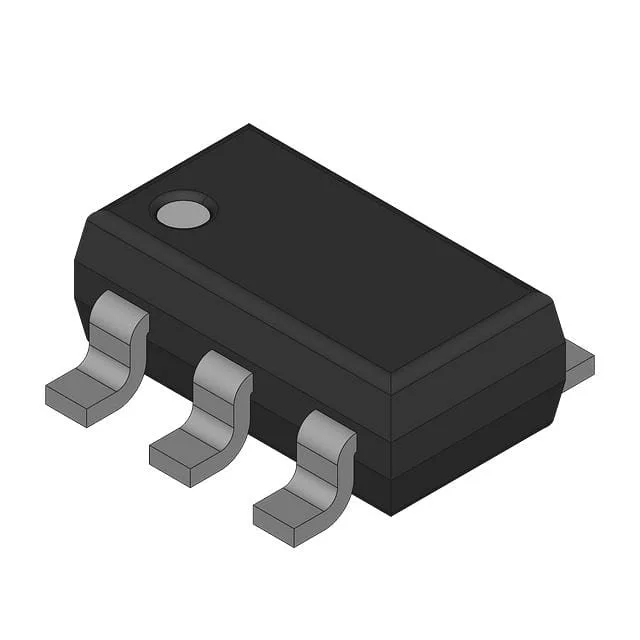
Boost regulator with integrated switch and PWM dimming
The MIC2287-34YML from Microchip Technology is a DC-DC boost regulator built around a 1.2 MHz PWM controller with an integrated 750 mA switch. It delivers a regulated output up to 34 V from a supply rail as low as 2.5 V, making it a compact single-inductor solution for white LED backlighting and camera flash applications where board space is tight. The 1.2 MHz switching frequency keeps the inductor and output capacitor physically small — a 4.7 µH chip inductor and 1 µF ceramic are typical for the output filter — which matters when the driver shares a PCB with the display connector or image sensor.
Output voltage ceiling and switch current — the real design limits
The 34 V output ceiling covers a series string of up to eight white LEDs in series (typical Vf ~3.2 V each) with headroom for the current-sense resistor. The 750 mA switch current rating is the peak inductor current limit, not the average LED current — for a boost driving an 8-LED string at 20 mA, the average inductor current is about 150 mA, so the switch rating leaves ample margin. The actual LED current is set by the external sense resistor and the internal 200 mV reference. PWM dimming is handled directly via the enable pin — the controller responds to a logic-level PWM signal without an external series MOSFET. Dimming frequency should stay below 1 kHz to avoid audible coil noise from the inductor; the 1.2 MHz switching carrier is well above the audio band.
Package and board-fit notes
The 8-VFDFN exposed pad package (Microchip's 8-MLF, 2x2 mm body) has a 0.50 mm pitch on the perimeter leads. The centre pad is the primary thermal and electrical ground connection — the datasheet recommends a 1.6 x 1.6 mm pad on the PCB with at least four thermal vias to the inner ground plane. The low profile (0.85 mm seated height) fits under display assemblies in handheld devices. The undervoltage lockout threshold is typically 2.3 V, preventing the inductor from saturating at low battery voltage.