What the 6 A rating means on the bench
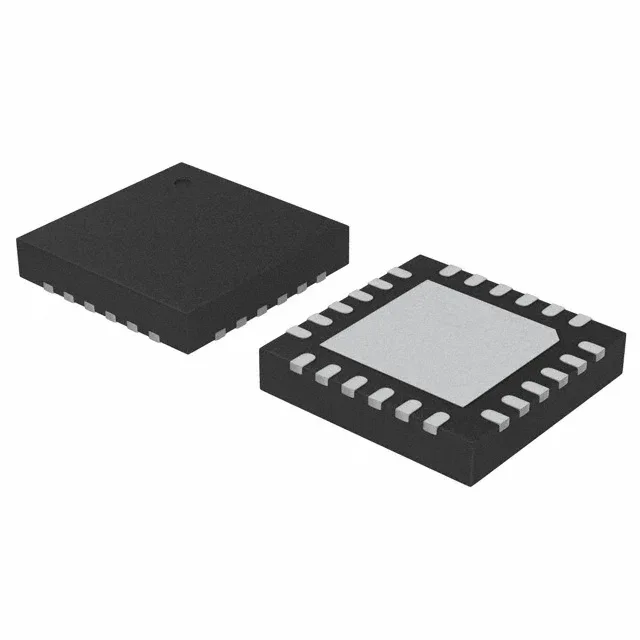
The MIC22600YML-TR is a 6 A continuous-output synchronous buck regulator from Microchip Technology, switching at 1 MHz and packaged in a 24-MLF (4x4 mm) with an exposed thermal pad. That 6 A figure is the continuous current it can deliver to the load without hitting thermal shutdown, assuming the PCB copper and airflow are adequate to pull heat out of the pad. The output is adjustable from 0.7 V up to 5.5 V, which covers the core voltages for most FPGAs, ASICs, and modern MCUs that need sub-1 V rails. Synchronous rectification is built in, meaning the low-side FET replaces the freewheeling diode. That cuts the dropout and improves efficiency at low output voltages where a diode's forward drop would eat into the margin.
Thermal and package realities for layout
The datasheet's thermal resistance numbers assume a thermal via array under the pad connected to an internal ground plane. Without those vias, the junction temperature rises faster than the 6 A rating suggests. At 125 °C junction, the silicon's on-resistance is higher, so the actual deliverable current at high ambient is lower than 6 A — derate per the datasheet curve.
Switching frequency and filter sizing
The 1 MHz switching frequency is a deliberate choice: it lets the output inductor and capacitor be physically smaller than a 500 kHz design would allow. A typical 1 MHz buck running 6 A needs an inductor in the 1-2.2 µH range and ceramic output caps in the 22-47 µF ballpark — both small 0805 or 1206 footprints. Because the switcher runs at 1 MHz, the switching losses in the internal FETs are higher than a lower-frequency part. The trade-off is smaller external components against a few percent efficiency loss at light loads — acceptable for most point-of-load designs where board space is the constraint.