Fixed 1.2V rail, 500 mA, and the dropout that matters
The MCP1725T-1202E/SN: It is the part to reach for when a digital core, MCU, or sensor rail needs a clean 1.2 V from a 2.5 V to 6 V input bus. Below that headroom the output follows the input minus dropout — a common trap when the upstream rail sags under transient load.
PSRR and noise rejection at 100 Hz
Power supply rejection ratio is 60 dB at 100 Hz, which attenuates 100 Hz ripple from a rectified mains supply by a factor of 1000. For an analog front-end or ADC reference rail fed from a switching pre-regulator, this PSRR figure is the first line of defence against line-frequency hum — but it rolls off above 100 Hz, so higher-frequency switching noise needs additional filtering ahead of the LDO. Quiescent current is 220 µA typical. That is the regulator's own draw from the input rail when the output is delivering current — not a sleep-mode figure. For battery-powered designs, this Iq matters in the active state; the Enable pin (one of the control features) lets you shut the regulator down to near-zero draw when the load is idle.
Temperature range and protection for industrial use
The 125°C ceiling covers under-hood automotive, motor-drive enclosures, and outdoor telecom equipment where ambient heat plus self-heating from 500 mA output pushes the die temperature up. On-chip protection includes over-temperature shutdown, short-circuit current limiting, and under-voltage lockout (UVLO). The UVLO prevents the output from turning on until the input rail is high enough to keep the pass transistor in its low-dropout region — avoids start-up into an undefined state.
8-SOIC package — rework and board-fit
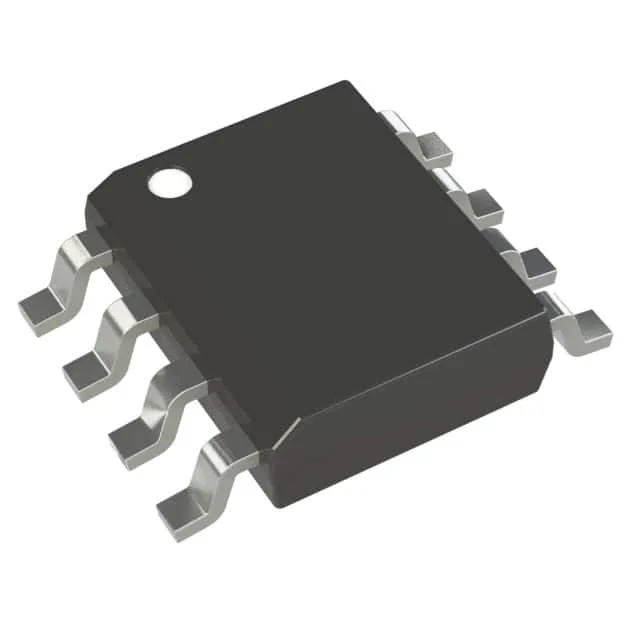
Housed in an 8-lead SOIC (0.154" body width, 3.90 mm), the MCP1725T-1202E/SN is a standard surface-mount package with 1.27 mm pitch. The leads are gull-wing — easy to inspect, easy to rework with hot air or a soldering iron. Pin 1 is clearly marked by a bevel on the package corner, so orientation is unambiguous under the microscope. The SOIC-8 has no exposed pad, so thermal dissipation goes through the leads into the PCB copper. For 500 mA output at high dropout (e.g. 5 V in to 1.2 V out), the power dissipation is about 1.9 W — that needs a solid ground-plane pour under the package to keep the die below the 125°C limit.
Active production and sourcing
For volume BOM lines, the reel quantity is the economical buy; for prototypes or small runs, cut tape avoids the reel minimum. Quoted to order against your quantity — availability and current pricing confirmed at RFQ.