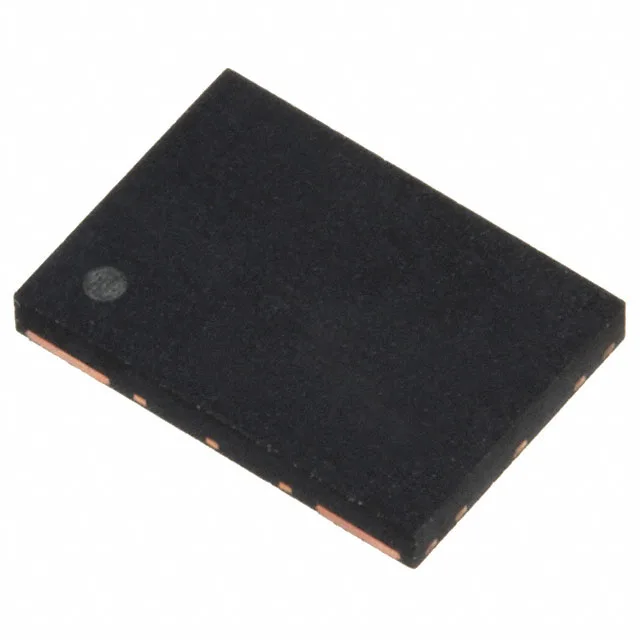
Active production — what it means for a BOM line
The DSC8001AI2-PROGRAMMABLE: For a procurement decision this means the manufacturer continues to accept new orders and supports the part for new designs. The part carries AEC-Q100 qualification, which adds automotive-grade reliability screening and temperature-cycle testing. That rating also signals extended production commitment — automotive-qualified parts typically have longer lifecycle windows than commercial-grade equivalents.
MEMS resonator — the practical difference from quartz
A MEMS oscillator has no start-up time — the output is stable within microseconds of power-on — and requires no external load capacitors or crystal selection. The frequency is set during programming, so a single PCB footprint serves any frequency in the 1 MHz to 150 MHz range. That figure includes initial tolerance, temperature drift, and supply-voltage sensitivity — the combined error budget for the system clock tree.
Supply voltage and power-down budgeting
The Standby function is controlled by a logic-level pin — pulling it low disables the CMOS output and enters the low-current state. The output returns to the programmed frequency within the specified start-up time when the pin is released.
The land pattern is the standard oscillator footprint for this size — no special pad geometry or via-in-pad required. Surface-mount reflow profile follows the standard JEDEC MSL level for MEMS oscillators.