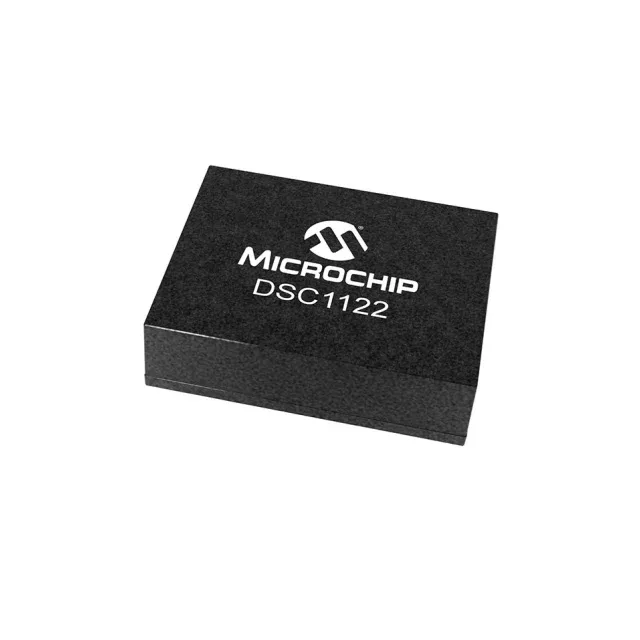
Microchip Technology DSC1224BI2-100M0000T — Crystals & Oscillators

DSC1224BI2-100M0000T – Microchip MEMS XO, 100 MHz, HCSL

MPNDSC1224BI2-100M0000T
Active

Microchip Technology DSC1224 series, XO (Standard), 100 MHz, HCSL output, ±25 ppm stability, 2.5V ~ 3.3V supply, 6-VDFN package, -40°C ~ 85°C.

Sourced new & surplus through independent channelsAuthenticity-screened · ESD-safe packingListing updated Aug 2026

Specifications

DSC1224BI2-100M0000T specifications
ParameterValue
TypeXO (Standard)
SeriesDSC1224
MountingSurface Mount
Voltage2.5V ~ 3.3V
Current - supply40mA (Typ)
Current - supply (Disable)23mA (Typ)
Frequency100 MHz
Frequency stability±25ppm
Operating temperature-40°C~85°C
Size (Dimension)0.197\" L x 0.126\" W (5.00mm x 3.20mm)
Height - seated0.035\" (0.90mm)
OutputHCSL
PackageTape & Reel (TR)
FunctionEnable/Disable
Base resonatorMEMS
Case6-VDFN

Product details

MEMS oscillator for 100 MHz clock trees

The DSC1224BI2-100M0000T is a 100 MHz MEMS-based XO from Microchip's DSC1224 series, delivering an HCSL output — the standard for PCIe Gen1/2/3 reference clocks and high-speed SerDes interfaces.

Supply voltage and output compatibility

The HCSL output is current-mode, requiring a 50-ohm termination to ground at the receiver; typical peak-to-peak swing is 700-900 mV, directly compatible with PCIe clock buffers and Intel/AMD chipset reference inputs.

Housed in a 6-VDFN package measuring 5.00 mm x 3.20 mm with a seated height of 0.90 mm — a compact footprint that matches standard 5x3.2 mm oscillator pads, allowing a drop-in replacement for quartz XOs of the same size.

No known successor; the DSC1224 series remains the current offering for this frequency/output combination.

Frequently asked questions

Can the DSC1224BI2-100M0000T replace a standard quartz crystal oscillator?

Yes, if the board uses a 5.0 mm x 3.2 mm oscillator footprint and expects an HCSL output. The MEMS base resonator offers better shock resistance and no crystal aging, but the output type must match — this is HCSL, not LVDS or LVPECL. Confirm the receiver's input standard before substituting.