51 MHz LVPECL clock – who specifies it and why
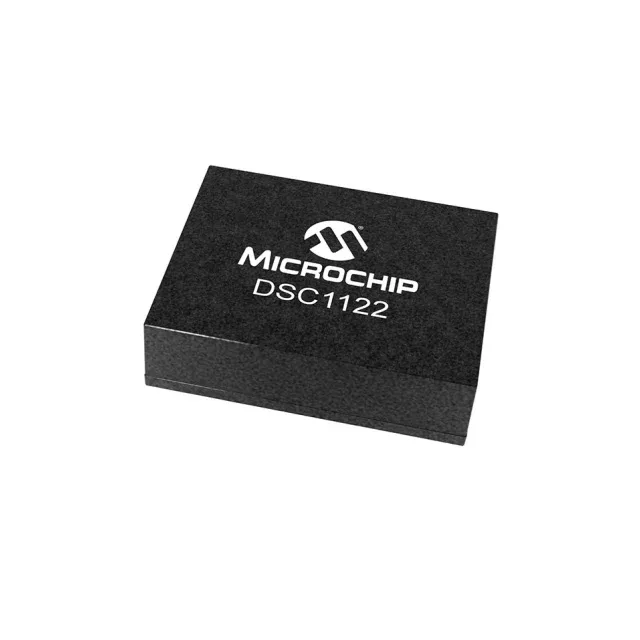
The DSC1222BI1-51M00000: This MEMS-based XO (Standard) outputs a 51 MHz LVPECL signal, a frequency commonly used to clock 10/100/1000 Ethernet PHYs, Fibre Channel controllers, or DDR memory interfaces where tight jitter is required and a quartz crystal would introduce phase noise. The LVPECL differential output delivers the low-skew, high-slew-rate edge needed for long trace runs on a backplane or across a large FPGA bank.
The oscillator accepts a supply from 2.5V to 3.3V, so it can run directly from a 3.3V FPGA I/O bank or a 2.5V SerDes rail without an intermediate LDO.
Industrial temperature range and stability margin
For an outdoor Ethernet switch that sees -30°C overnight and 70°C in direct sun, the stability margin keeps the link up without a clock-recovery PLL retrain.
Package and footprint – VDFN-6 layout reuse
The 6-VDFN package measures 5.00mm x 3.20mm with a seated height of 0.90 mm. This footprint is shared across the DSC1222 family and many other MEMS oscillators, so a single PCB pad pattern can serve multiple frequency variants.