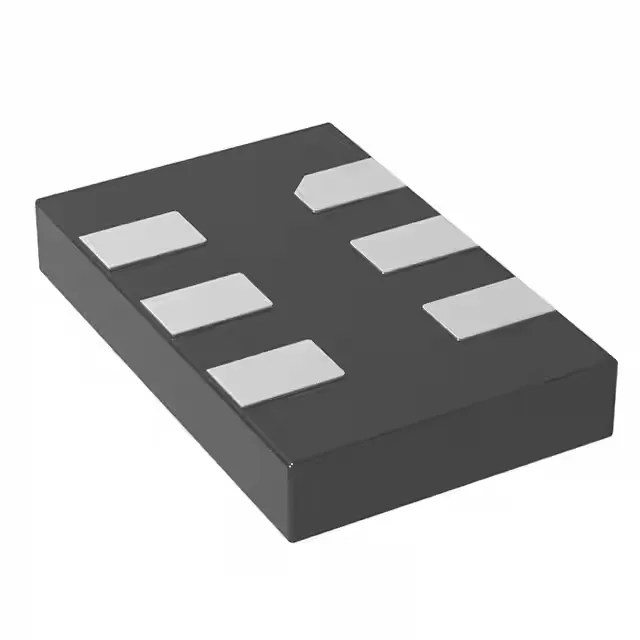
Microchip Technology DSC1200BL3-PROG — Crystals & Oscillators

DSC1200BL3-PROG MEMS Programmable Oscillator

MPNDSC1200BL3-PROG
Active

Microchip Technology DSC1200BL3-PROG, XO (Standard) MEMS oscillator, 6-VDFN, blank programmable, 2.5 MHz–450 MHz, ±20 ppm total stability, -40°C to 105°C

$2.5350Ref. price · indicative, final on quote
Sourced new & surplus through independent channelsAuthenticity-screened · ESD-safe packingListing updated Aug 2026

Specifications

DSC1200BL3-PROG specifications
ParameterValue
TypeXO (Standard)
SeriesDSC1200
MountingSurface Mount
Programmable typeBlank (User Must Program)
Voltage2.25V ~ 3.63V
Available frequency range2.5 MHz ~ 450 MHz
Frequency stability (Total)±20ppm
Operating temperature-40°C~105°C
Size (Dimension)0.197\" L x 0.126\" W (5.00mm x 3.20mm)
Height - seated0.035\" (0.90mm)
PackageTube
FunctionStandby (Power Down)
Base resonatorMEMS
Case6-VDFN

Product details

MEMS oscillator, blank-programmable, 2.5–450 MHz

The DSC1200BL3-PROG is a MEMS-based XO (Standard) from Microchip's DSC1200 series, supplied as a blank device that the user programs to any frequency between 2.5 MHz and 450 MHz.

The supply voltage spans 2.25 V to 3.63 V, covering 2.5 V and 3.3 V rails without a separate regulator.

Standby function and 6-VDFN package

The 6-VDFN package measures 5.00 mm x 3.20 mm with a seated height of 0.90 mm — a low-profile footprint for space-constrained PCBs.

Microchip lists the DSC1200BL3-PROG as Active.

Frequently asked questions

How do I program the DSC1200BL3-PROG?

The DSC1200BL3-PROG ships blank (unprogrammed). Microchip provides the TimeFlash Field Programmer (part number TD-0100) and the TimeFlash software GUI to set the output frequency, supply voltage, and output drive strength. The programmer connects to the 6-VDFN package via a socket adapter.

Is the DSC1200BL3-PROG a direct replacement for a standard 6-pin quartz oscillator?

Pin-compatible with many 6-pin quartz oscillators in the same 5.0 mm x 3.2 mm footprint, but the MEMS die has different power-up timing and startup behaviour. Confirm the downstream PLL or logic expects the MEMS oscillator's rise time and enable/disable thresholds before dropping it into an existing layout.