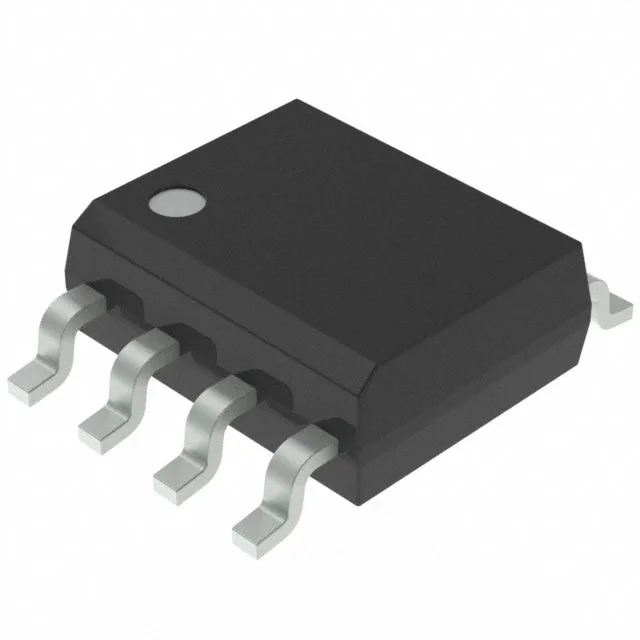
Microchip Technology ATTINY412-SSN — Microcontrollers & Processors (MCU / MPU / DSP)

ATTINY412-SSN Microchip 8-bit AVR MCU, 20 MHz, 4 KB Flash

MPNATTINY412-SSN
Active

Microchip tinyAVR™ 1, Functional Safety (FuSa) series, ATTINY412-SSN, 8-bit AVR MCU, 20 MHz, 4 KB Flash, 256 x 8 RAM, 128 x 8 EEPROM, 8-SOIC, -40°C to 105°C, 1.8V to 5.5V.

$0.6100Ref. price · indicative, final on quote
Packaging8-SOIC (0.154", 3.90mm Width)
SeriestinyAVR™ 1, Functional Safety (FuSa)
Independent supplier — new & surplus stockAuthenticity-screened · ESD-safe packingListing updated Jul 2026

Specifications

ATTINY412-SSN specifications
ParameterValue
SeriestinyAVR™ 1, Functional Safety (FuSa)
MountingSurface Mount
Oscillator typeInternal
Program memory typeFLASH
Voltage - supply (Vcc (Vdd))1.8V ~ 5.5V
Operating temperature-40°C~105°C(TA)
Speed20MHz
PackageTube
RAM size256 x 8
Core size8-Bit
EEPROM size128 x 8
PeripheralsBrown-out Detect/Reset, POR, WDT
ConnectivityI²C, IrDA, LINbus, SPI, UART/USART
Number of i (O)6
Core processorAVR
Case8-SOIC (0.154\", 3.90mm Width)
Data convertersA/D 6x10b; D/A 1x8b
Program memory size4KB (4K x 8)

Product details

The Microchip ATTINY412-SSN is an 8-bit AVR microcontroller from the tinyAVR™ 1 series, qualified for Functional Safety (FuSa) applications. It runs at 20 MHz from an internal oscillator, with 4 KB of Flash program memory, 256 bytes of SRAM, and 128 bytes of EEPROM — enough for small sensor nodes, LIN bus slaves, or simple control loops where code size is tight and board space is at a premium.

Memory and I/O — sizing the firmware and the board

With 4 KB of Flash, this part is aimed at single-purpose firmware — a LIN transceiver node, a temperature sensor hub, or a simple PWM fan controller. The 256-byte SRAM and 128-byte EEPROM are sufficient for a few sensor readings and calibration constants, but you won't fit a USB stack or a complex state machine. The six general-purpose I/O pins (in an 8-SOIC package) are enough for a couple of serial buses and a few digital inputs or outputs; the internal oscillator saves two pins that would otherwise go to a crystal.

Connectivity and peripherals — what fits in six I/O

In practice, you can run one serial bus (say, I²C or SPI) plus a couple of analog inputs without multiplexing. The LINbus support makes this a natural fit for automotive body-control modules where a LIN node needs to report a switch state or read a sensor.

Frequently asked questions

What is the difference between ATTINY412-SSN and ATTINY412-SSUR?

The difference is the shipping medium: the ATTINY412-SSN ships in a Tube, while the ATTINY412-SSUR ships in Tape & Reel. The die, package, and electrical specifications are identical.

How to program ATTINY412-SSN?

The ATTINY412-SSN uses the Microchip UPDI (Unified Program and Debug Interface) on a single pin. It can be programmed with a Microchip programmer/debugger (such as the PICkit 4, PICkit 5, or Atmel-ICE) or a third-party tool that supports UPDI. The internal oscillator is calibrated at the factory, so no external clock is needed for programming.