The minimum breakdown voltage is 142.5 V, so on a 114 V nominal rail the device stays off until a surge pushes the rail past that threshold. When it does fire, the clamping voltage is 206.3 V at a peak pulse current of 7.3 A under the standard 10/1000 µs waveform. That 206.3 V is the voltage the protected circuitry must survive — if your downstream MOSFET or controller is rated for 200 V absolute max, this clamp is too tight; you need a higher standoff part.
1500 W peak pulse — sizing the surge energy
For a 114 V rail, 1500 W translates to a peak current of about 7.3 A, which is the current the device shunts during the clamp. If your application sees repetitive surges or longer pulse widths, derate the peak power per the datasheet pulse derating curve.
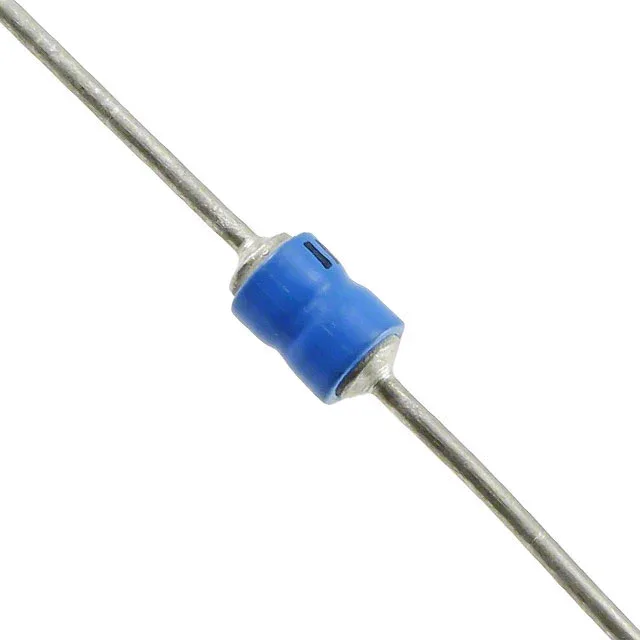
That 175°C ceiling matters for avionics, downhole tools, and outdoor telecom enclosures where ambient heat plus self-heating from the surge pushes junction temperature well above 125°C. The through-hole Axial package handles the thermal dissipation better than a surface-mount equivalent — the leads conduct heat into the PCB copper and the air around the body.
Bidirectional — one device, both polarities
The 1N6170A is a single bidirectional channel, meaning it clamps transients of either polarity. That is useful on AC-coupled data lines (RS-485, Ethernet magnetics) or on floating DC rails where the signal swings through zero.
Lifecycle and sourcing — active, quoted to order
The Axial package is a through-hole form factor, which is a mature, widely stocked footprint. For volume pricing and lead time, submit an RFQ with the target quantity and date-code preference.