What this Zener TVS protects
Its 500W peak pulse power rating handles moderate surge events on power rails, signal lines, and I/O ports. With a reverse standoff voltage of 15.2V and a clamping voltage of 27.7V at 18A peak pulse current, this part protects 12V and 15V rails against overvoltage spikes. The single bidirectional channel clamps both polarities, eliminating the need for two unidirectional diodes in series.
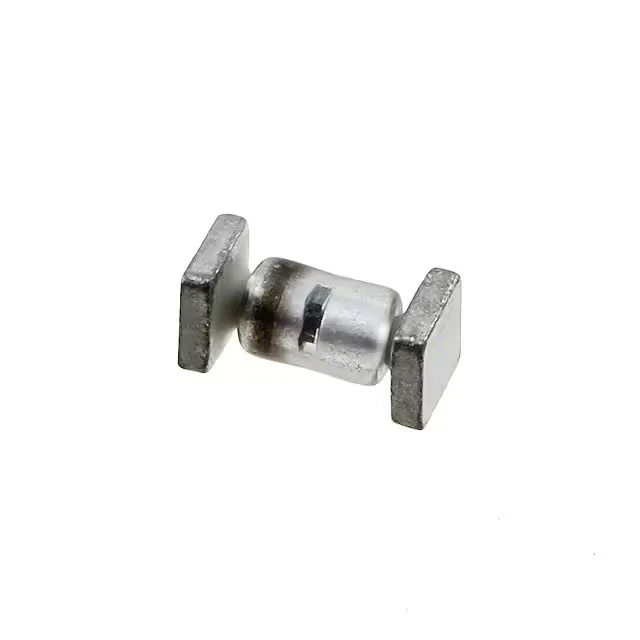
The 1N6113AUS comes in a SQ-MELF B package (surface-mount, square MELF outline). This hermetic ceramic package offers superior moisture resistance and thermal cycling capability compared to plastic SMD packages — a key advantage in high-reliability and military-grade applications. The ceramic body allows lead-free reflow soldering.
Because it is a hermetic ceramic package part, lead times can be longer than plastic equivalents.
For a 15.2V standoff rail, the clamping voltage of 27.7V means the protected circuit sees a maximum of 27.7V during a 18A transient — ensure downstream components have a breakdown voltage above 28V.