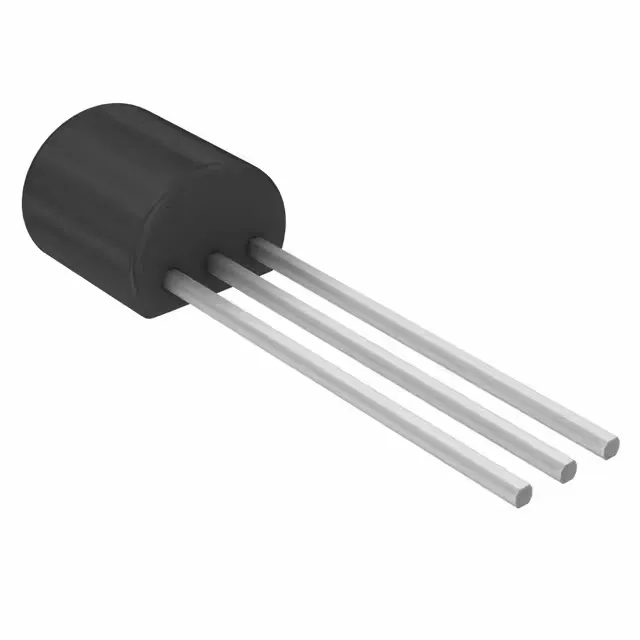
Single-wire 1Kbit EEPROM in a TO-92-3
The Microchip 11AA010-I/TO is a 1Kbit serial EEPROM organized as 128 x 8 bits, communicating over a single-wire interface at up to 100 kHz. The single-wire bus saves one GPIO compared to I2C or SPI EEPROMs, which matters when the host MCU has no spare pins or the board area is constrained. The TO-92-3 through-hole package suits hand-assembly, prototyping, or retrofit into existing sockets.
The 100 kHz clock sets the read throughput at roughly 12.5 kbytes/s sustained. The write cycle time of 5 ms per byte or page means a full 128-byte rewrite takes about 640 ms if written byte by byte; writing in page mode (if supported) cuts that to 5 ms per page. For infrequent writes — calibration constants, serial numbers, boot parameters — this is adequate. For streaming data logging, a faster interface (I2C at 400 kHz or SPI at 1 MHz) would be needed.
ROHS3 compliance is confirmed, so it meets the EU directive for lead-free soldering and handling.
Single-wire vs I2C — the interface difference that decides fit
The single-wire interface uses one data line for both clock and data, which simplifies routing but limits bus speed to 100 kHz and does not support multi-drop addressing the way I2C does. The 24AA01-I/P (I2C, 400 kHz) and AT24C01C-PUM (I2C, 1 MHz) are pin-compatible in the same TO-92-3 footprint but require two wires (SCL, SDA) and a pull-up resistor on each. If the host MCU has an I2C peripheral free, the 24AA01-I/P offers four times the clock speed; if the only free pin is a GPIO, the 11AA010-I/TO is the simpler choice.
Through-hole assembly — TO-92-3 in a Bag
The part ships in a Bag (bulk), not tape-and-reel, which is typical for through-hole devices. The TO-92-3 package has a 2.54 mm pin pitch and fits standard 0.1-inch prototyping boards. No special moisture sensitivity level (MSL) concerns apply — through-hole parts are generally MSL 1 and do not require baking before soldering.