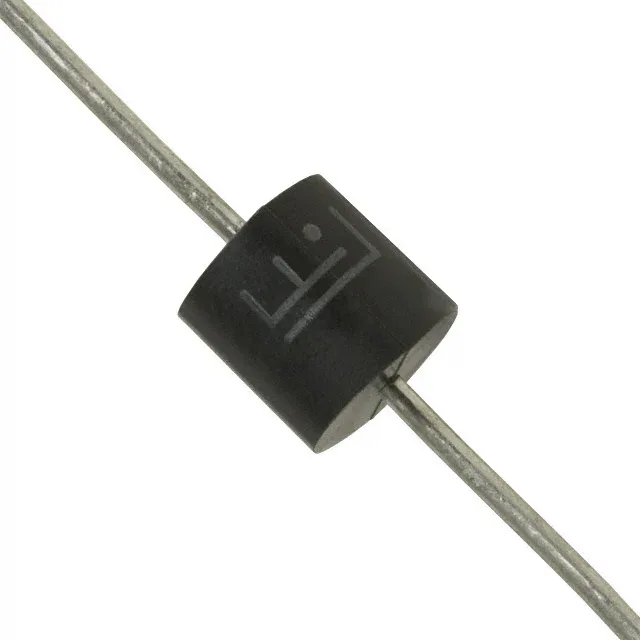
5 kW peak pulse — what the rating means
The 5KP11A: The 5000 W peak pulse rating defines the clamping headroom available before the TVS enters conduction. At 280.2 A peak pulse current into a fault surge, the clamping voltage locks at 18.2 V maximum — this is the voltage the protected load sees during the event. A downstream bus rated for 15 V would be at risk; one rated 24 V nominal sees 18.2 V as a manageable transitory spike, not a sustained overstress. The 5 kW figure is a 10/1000 µs surge shape per the standard IEC 61000-4-5 test waveform — it does not scale linearly to longer-duration or higher-energy events, so the clamping characteristic at the specific threat profile matters more than the headline wattage.
Voltage window — standoff, breakdown, and clamping
The minimum breakdown of 12.2 V marks where conduction begins; the clamping ceiling of 18.2 V is where the device clamps the surge at peak current. That 6 V window between breakdown onset and full clamping is tight — the part transitions from off to protective conduction over a narrow band. For a 12 V rail, 11 V standoff leaves only 1 V of headroom before the device begins conducting at 12.2 V, so the ripple budget on the rail must stay well below that to avoid premature triggering.
P600 axial and thermal margin
The P600 axial package is the through-hole form factor for this power class — the lead length and copper pad area on the PCB set the thermal impedance from junction to ambient. For a long or repetitive surge, the device must reset thermally between events or the clamping ceiling creeps upward. The part is listed for general-purpose use — not automotive-qualified, so a safety-critical under-hood deployment would require separate qualification beyond the standard datasheet.