1500 W peak pulse — what that rating actually means for your protection design
The 1.5KE120A-TB: That 1500 W figure is tied to that specific pulse shape: a shorter-duration surge (e.g. 8/20 µs) allows a higher peak current, while a longer pulse requires derating. For a 10/1000 µs event, the device clamps at 165 V while conducting 9.2 A — this is the voltage the downstream circuit sees during the surge. The reverse standoff voltage is 102 V, meaning the TVS does not conduct at normal line voltage up to that level. Breakdown occurs at a minimum of 114 V, so there is a 12 V window between the maximum operating voltage and the onset of clamping — enough margin for most 100 V nominal rails.
Through-hole DO-201 package — board integration and thermal path
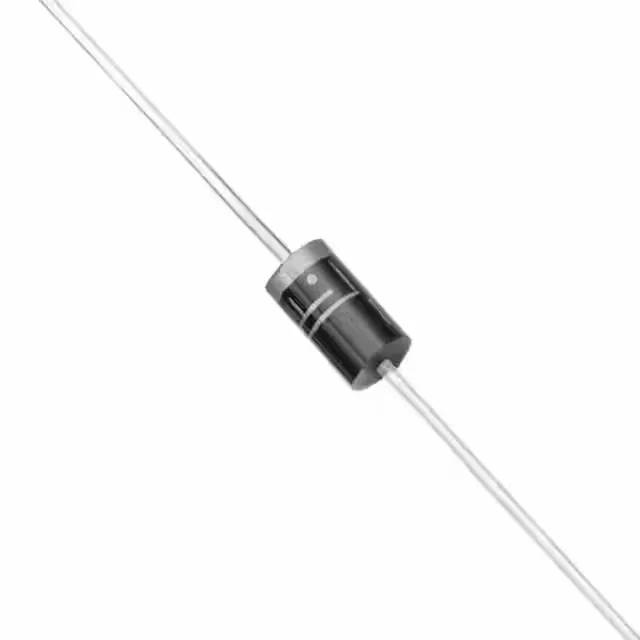
The part comes in a DO-201AA / DO-27 axial-lead package, through-hole mounted. The lead bend and the hole spacing on the PCB must match the body length — typically about 7.6 mm body diameter and 5.1 mm body length — to keep the device mechanically stable and to allow the leads to conduct heat into the board copper. At the high end, leakage current rises significantly — expect the standby current to be orders of magnitude higher at 175°C than at 25°C, so factor that into any always-powered circuit's quiescent budget.