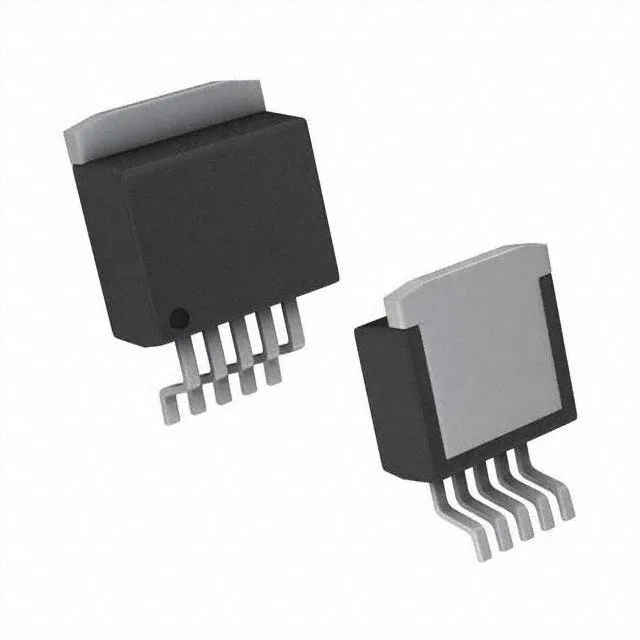
The TLE42702GATMA1: The part is ROHS3 compliant, meeting the European end-of-life vehicle (ELV) directive requirements that automotive Tier-1s enforce on all BOM submissions.
The PG-TO263-5-1 (D²Pak) package has an exposed metal tab on the bottom surface. In a typical PCB layout with a 1-square-inch copper pad on the top layer, the thermal resistance drops enough to deliver the full 650 mA at 125°C ambient without exceeding the 150°C junction ceiling.
42V input survival — ISO 7637-2 load dump without an external clamp
The 42V maximum input voltage means this regulator sits through a 12V battery system's load-dump transient (typically 35-40V for 400 ms per ISO 7637-2 pulse 5a) without requiring an external TVS clamp ahead of the input pin. Internal protection covers all six fault modes the OEM auditor will check: over-current, over-temperature, over-voltage, reverse polarity, short-circuit, and transient voltage. That is one IC-level compliance block crossed off the PPAP checklist.
Dropout headroom and output current — the real sizing constraint
Maximum dropout is 0.7 V at 550 mA output. For a 5 V fixed-output rail, the input must stay above 5.7 V across the full load range or the regulator falls out of regulation — a critical check when the input is a 5.8 V pre-regulator or a battery at the end of its discharge curve. The 650 mA continuous output rating is the headline number, but the dropout-limited current at low input voltage is the figure that governs the real load budget in a cranking automotive environment.
Alternator ripple rejection — 54 dB at 100 Hz
With 54 dB PSRR at 100 Hz, this LDO attenuates the dominant alternator ripple frequency (6× engine RPM for a 6-pole alternator — roughly 100 Hz at 1000 RPM idle) by a factor of 500. That keeps the 5 V sensor supply clean enough for a 12-bit ADC front-end without post-regulation filtering.
Quiescent and supply-current budget for ignition-off loads
The 1.5 mA quiescent current (Iq) is the regulator's own draw when the output is lightly loaded. In a module that sleeps with the ignition off, this sets the floor for the total battery drain — a 50 mAh battery pack loses 33 hours of standby per mA. Maximum supply current is 90 mA under fault or full-load transients. This bounds the upstream fuse or PTC sizing: a 100 mA rated input path has no margin; a 250 mA path is safe.