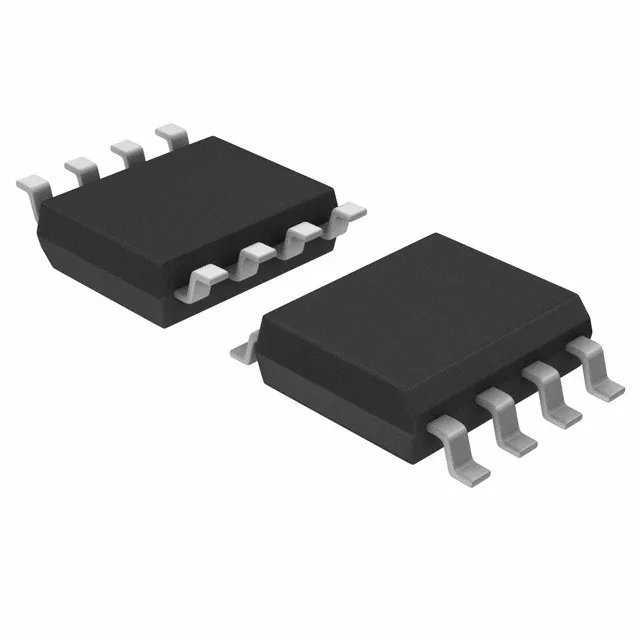
Infineon Technologies FM25640B-GTR — Memory (DRAM / SRAM / Flash / EEPROM)

Infineon FM25640B-GTR F-RAM, 64Kbit SPI 20MHz, 8-SOIC

MPNFM25640B-GTR
Active

Infineon F-RAM™ FM25640B-GTR, 64Kbit FRAM, SPI interface, 20 MHz clock, 4.5V-5.5V supply, 8K x 8 organization, -40°C to 85°C, 8-SOIC package, Tape & Reel.

$4.6300Ref. price · indicative, final on quote
Packaging8-SOIC (0.154", 3.90mm Width)
RoHSROHS3 Compliant
SeriesF-RAM™
Independent supplier — new & surplus stockAuthenticity-screened · ESD-safe packingListing updated Aug 2026

Specifications

FM25640B-GTR specifications
ParameterValue
SeriesF-RAM™
Memory typeNon-Volatile
MountingSurface Mount
Supply voltage4.5V ~ 5.5V
Clock frequency20 MHz
Memory interfaceSPI
Operating temperature-40°C ~ 85°C (TA)
PackageTape & Reel (TR) Cut Tape (CT)
TechnologyFRAM (Ferroelectric RAM)
Memory size64Kbit
Memory formatFRAM
Case8-SOIC (0.154\", 3.90mm Width)
Memory organization8K x 8

Product details

64Kbit FRAM with SPI — what it replaces and why

The Infineon FM25640B-GTR is a 64Kbit Ferroelectric RAM (FRAM) from the F-RAM™ series, organized as 8K x 8 bits and accessed through an SPI bus at up to 20 MHz. This makes it a direct drop-in for serial EEPROM sockets where the application needs faster writes, higher endurance, or lower write energy.

20 MHz SPI — bus timing and throughput

At 20 MHz the SPI interface delivers a raw read throughput of 20 Mbps. The FRAM technology means a write cycle completes in the same 50 ns clock period as a read — no write-polling, no page-buffer management. For a data-logging application that writes 64 bytes every 10 ms, the FM25640B-GTR finishes the write in under 26 µs versus the several milliseconds a 64-byte page write takes in a typical serial EEPROM. That timing difference matters when the MCU needs to service other interrupts during the store operation.

FRAM endurance — 10^14 cycles versus EEPROM's 10^6

The FM25640B-GTR uses ferroelectric storage with endurance rated at 10^14 read/write cycles, compared to the 10^6 cycles typical of serial EEPROMs. For a system that writes configuration data every power cycle or logs sensor data continuously, that endurance margin eliminates wear-leveling software and the risk of sector failure over a ten-year service life.

Package and supply — 8-SOIC, 5V rail

The supply range is 4.5V to 5.5V, so it runs directly from a 5V rail without a regulator. The SPI bus pins are 5V-tolerant inputs, which means a 3.3V MCU can drive them through a level translator or a simple resistor divider on the output lines. For a 5V-only design, no translation is needed at all.

Frequently asked questions

Is FM25640B-GTR RoHS compliant and lead-free?

Yes, the FM25640B-GTR is ROHS3 Compliant, meeting the EU RoHS directive for lead-free and restricted-substance-free manufacturing.

Can FM25640B-GTR be used as a drop-in replacement for a 25AA256 EEPROM?

The FM25640B-GTR is a 64Kbit device, not 256Kbit, so it does not match the 25AA256 density. However, for a 64Kbit serial EEPROM socket, the FM25640B-GTR is a pin-compatible drop-in replacement with the same SPI interface and 8-SOIC footprint, offering faster writes and higher endurance without software changes.

When sourcing FM25640B-GTR, what's the closest functional second-source — FM25640B-G?

The FM25640B-G is the tube-packaged variant of the same die — same 64Kbit FRAM, same SPI interface, same 20 MHz clock, same 8-SOIC footprint. The only difference is the shipping medium: the FM25640B-GTR is Tape & Reel, while the FM25640B-G comes in tubes. For a BOM that specifies Tape & Reel, the FM25640B-G is a functional equivalent but requires a packaging change on the assembly line.