DDR II SRAM for high-throughput buffers
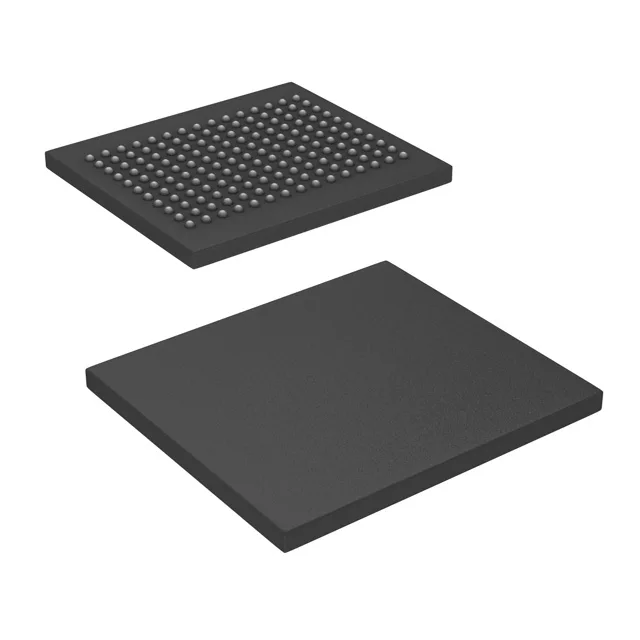
The Cypress CY7C1518V18-200BZC is a 72 Mbit synchronous DDR II SRAM organized as 4M x 18, clocked at 200 MHz over a parallel interface. This is a volatile memory part from the CY7C1518 family, built for applications that need back-to-back read/write throughput without bus-turnaround dead cycles — think network packet buffers, telecom line cards, and high-end test equipment where the DDR II protocol doubles the effective data rate on each clock edge. The 165-ball FBGA (15x17 mm) package is a fine-pitch BGA that demands careful PCB layout — the 1.8V core supply needs local decoupling with low-ESR caps placed close to the balls, and the DDR II strobe signals want matched trace lengths to maintain setup/hold margins at 200 MHz.
Cypress (now part of Infineon) no longer manufactures this exact variant, so new production orders are not available through the factory channel. For BOM lines that still call out this order code, supply is limited to verified surplus stock held by independent distributors — the parts that exist are already in the channel, and once they are gone there is no more. Because this is a high-density BGA SRAM, counterfeit risk on the surplus market is real. Any stock we quote is sourced with traceability back to the original manufacturer date codes and inspected per industry-standard visual and X-ray screening.
The 200 MHz clock frequency is the core timing parameter for this DDR II SRAM. Because data is transferred on both rising and falling clock edges, the effective data rate is 400 MT/s per I/O pin. For a 4M x 18 configuration, that translates to a peak bandwidth of roughly 7.2 Gbit/s across the 18-bit bus. The design must account for signal-integrity closure at this speed — the FBGA package's short internal bond wires help, but the PCB stack-up and termination scheme on the data and strobe lines will determine whether the part actually hits that rate in your system. The supply voltage tolerance (1.7V to 1.9V) is tight; a 1.8V nominal rail with ±5% regulation is the safe choice. Droop below 1.7V during a burst access can cause data corruption, so the power distribution network needs enough decoupling capacitance to handle the transient current draw of a full-width read cycle at 200 MHz.