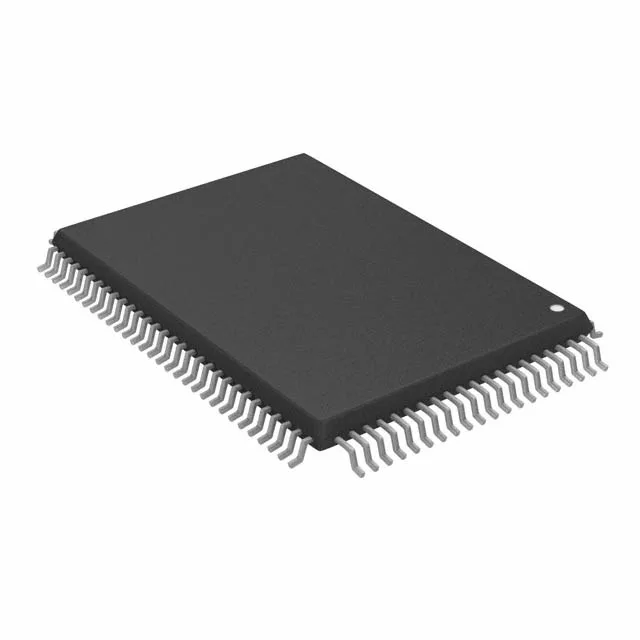
167 MHz synchronous SRAM — 72 Mbit wide-word buffer
The CY7C1480BV25-167AXC: The wide 36-bit word width suits high-throughput applications like network switch lookup tables, telecom line-card buffers, and deep FIFO emulation where a single chip replaces multiple narrower memories.
Last Buy — sourcing window is closing
Infineon has classified this part as Last Buy. That means the manufacturer's production window is closing — orders placed now may be the final chance to secure inventory through authorized channels. Once that window shuts, the only supply will be through independent surplus and broker networks, where pricing and availability are lot-specific. For designs already in production, this is the time to evaluate last-time-buy quantities or identify a migration path.
Housed in a 100-lead LQFP (also specified as 100-TQFP, 14x20 mm body), this is a fine-pitch QFP. The 0.5 mm lead pitch means the hot-air rework profile needs a nozzle that covers the whole body without overheating adjacent parts. The exposed pad is on the bottom — preheat the board from the underside to 150°C before lifting the part, and use a tacky flux to reflow the replacement without bridging. The tray packaging keeps leads protected during handling; avoid bending the gull-wing leads when transferring to a pick-and-place feeder.
Supply voltage and temperature — commercial-grade only
Operates from a 2.375 V to 2.625 V supply — a 2.5 V nominal rail with tight tolerance. If the ambient near the memory exceeds 70°C, the access time and retention may degrade; derating or a wider-temp variant is needed. The parallel memory interface connects directly to a controller's SRAM controller — no serial protocol overhead. The 3.4 ns access time at 167 MHz means the controller must sample data within that window; a 6 ns cycle time leaves 2.6 ns for output hold and setup, which is tight for long PCB traces.