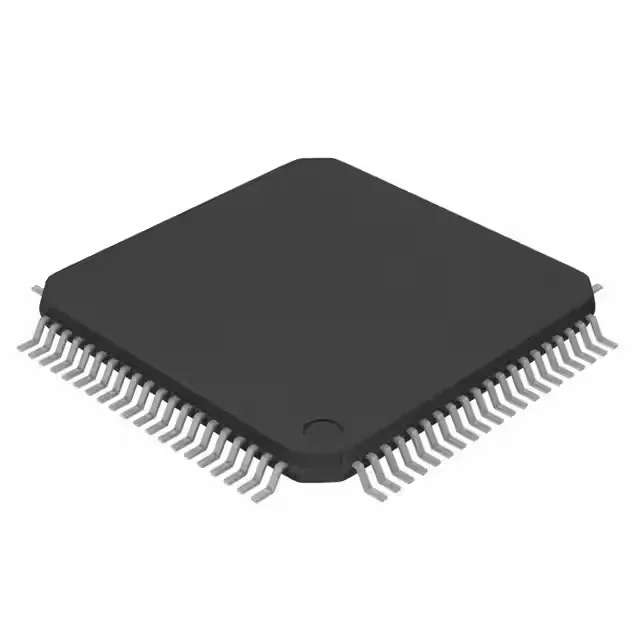
15 ns dual-port SRAM — the shared-memory bridge
The Cypress CY7C145-15AXCT is a 72Kbit dual-port asynchronous SRAM organized as 8K x 9 bits, in an 80-TQFP surface-mount package. Its 15 ns access time lets two independent bus masters read or write the same memory array without wait states, as long as they avoid the same address simultaneously. The 9th bit per word is typically used for parity or a tag flag, which is useful in fault-tolerant or cache-tag designs.
8K x 9 organization — why the 9th bit matters
The 8K x 9 memory organization is less common than the standard x8 or x16 width. The extra bit per byte is often mapped as a parity bit for single-bit error detection across the shared memory, or as a software-controlled flag for inter-processor semaphore signaling. If your design expects a straight x8 memory map, you will need to account for the 9-bit bus width in the FPGA or ASIC interface logic. The 72Kbit total capacity is modest — sized for a mailbox buffer, a small packet FIFO, or a configuration store shared between two processors, not for bulk data.
The CY7C145-15AXCT is officially obsolete per the manufacturer's product status. Cypress (now part of Infineon) no longer manufactures this die. There is no listed direct replacement from the original manufacturer.
Commercial temperature — indoor equipment only
It is not specified for industrial enclosures, outdoor cabinets, or automotive under-hood environments. If your application sees -40°C or +85°C, this part will not meet the temperature rating.
80-TQFP footprint — layout notes
This is a standard JEDEC footprint, and the land pattern is widely available in PCB layout libraries. The Tape & Reel suffix (CT) indicates it ships on a reel for automated pick-and-place assembly. MSL is typically 3 for this package family — verify the moisture sensitivity level on the reel label before reflow, and bake if the floor-life has been exceeded.