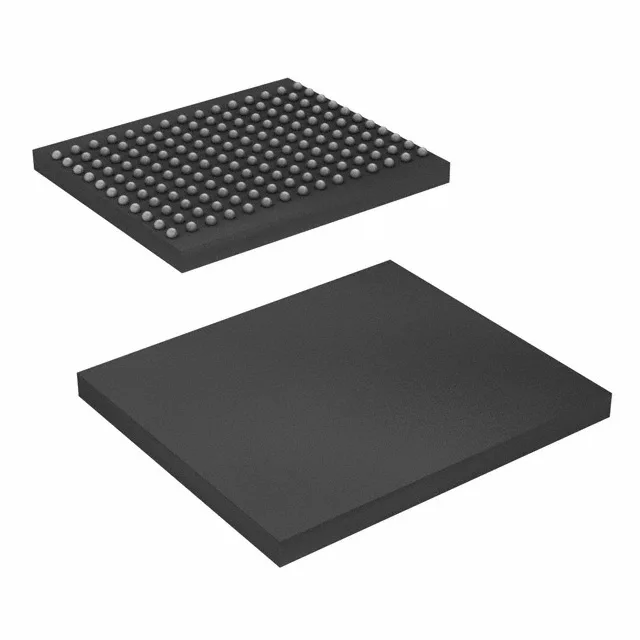
QDR II SRAM for high-bandwidth datapath buffering
The Cypress CY7C1413KV18-300BZXC is a 36Mbit synchronous QDR II SRAM organized as 2M x 18. It operates at a 300 MHz clock, delivering back-to-back read and write transactions on separate ports without dead cycles — the defining advantage of the QDR II architecture for line-rate packet processing and high-speed data acquisition. The memory uses a parallel interface and requires a 1.7V to 1.9V core supply. It is packaged in a 165-ball FBGA (13x15 mm) and is rated for commercial temperature operation from 0°C to 70°C.
300 MHz clock — timing budget and signal integrity
At 300 MHz the read/write cycle time is 3.3 ns. That puts pressure on the PCB trace length matching and the clock jitter budget. The QDR II architecture helps by separating the read and write data buses, but the layout engineer still needs to control stub lengths and use proper termination on the 18-bit data and address lines. The 1.7V to 1.9V supply range is tight — a 1.8V nominal rail with ±3% regulation is the typical choice. Any droop below 1.7V during transient loading will violate the minimum, so the power rail needs a local LDO or a low-impedance switcher with adequate decoupling at the BGA ball field.
165-ball FBGA — what the package demands
The 165-FBGA (13x15 mm) is a fine-pitch BGA. The part ships in Tray, not Tape & Reel.
Commercial temp — indoor only
It is not qualified for outdoor telecom cabinets, engine bays, or industrial floor applications where ambient temperature can swing below freezing or above 70°C.