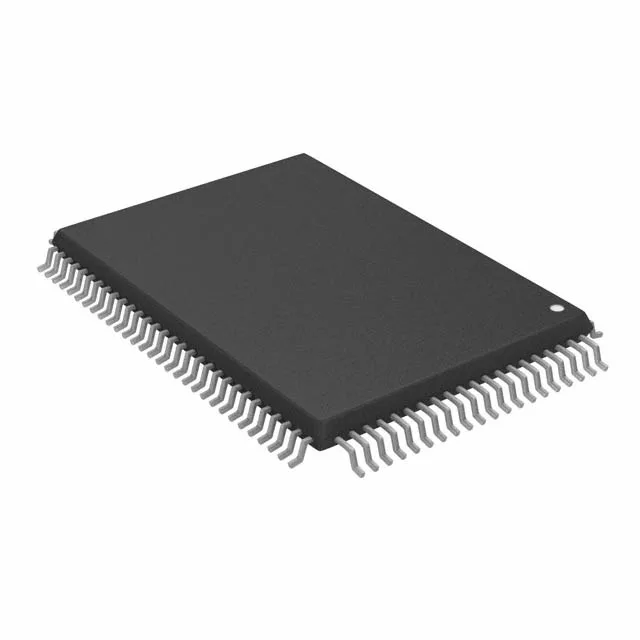
Infineon Technologies CY7C1387KV33-167AXC — Memory (DRAM / SRAM / Flash / EEPROM)

CY7C1387KV33-167AXC Infineon 18Mbit Synchronous SRAM

MPNCY7C1387KV33-167AXC
Active

Infineon CY7C1387KV33-167AXC synchronous SRAM, 18Mbit (1M x 18), 167 MHz clock, 3.4 ns access, parallel interface, 3.135V–3.6V supply, 100-TQFP, 0°C–70°C.

$23.1865Ref. price · indicative, final on quote
Independent supplier — new & surplus stockAuthenticity-screened · ESD-safe packingListing updated Aug 2026

Specifications

CY7C1387KV33-167AXC specifications
ParameterValue
Memory typeVolatile
MountingSurface Mount
Supply voltage3.135V ~ 3.6V
Clock frequency167 MHz
Memory interfaceParallel
Operating temperature0°C ~ 70°C (TA)
PackageTray
TechnologySRAM - Synchronous, SDR
Access time3.4 ns
Memory size18Mbit
Memory formatSRAM
Case100-LQFP
Memory organization1M x 18

Product details

What this synchronous SRAM does in the system

167 MHz clock and 3.4 ns access — timing budget fit

At 167 MHz the clock period is about 6 ns; the 3.4 ns access time leaves roughly 2.6 ns of setup-and-hold margin for the controller. That margin shrinks with board trace delay and clock jitter, so keep the trace length under 2 inches and use a series termination resistor close to the SRAM pin. The synchronous SDR (single-data-rate) interface latches data on the rising edge only, which simplifies timing closure compared to a DDR part but halves the peak bandwidth per pin.

Not rated for industrial enclosures or outdoor deployment without active cooling.

Infineon lists the CY7C1387KV33-167AXC as Active. This part is still a standard production item, suitable for both new BOMs and sustaining production. The base product number CY7C1387 covers multiple speed and temperature variants, so if a future design needs the industrial-temperature sibling CY7C1387KV33-167AXI, the footprint and pinout match — only the temperature grade changes.

Frequently asked questions

Can I use CY7C1387KV33-167AXC in place of CY7C1387KV33-167AXI?

Both share the same 100-TQFP footprint, pinout, and 167 MHz / 3.4 ns timing. You can substitute the industrial part for the commercial one if the application needs the wider temperature range, but not the reverse — the commercial part is not rated for industrial environments.