Memory organization and clock — what fits the pipeline
The CY7C1361KVE33-133AXI: Organized as 256K x 36 — the 36-bit word width matches a 32-bit data bus plus parity or ECC overhead without packing two cycles. At 133 MHz clock frequency, the synchronous SDR interface delivers a burst rate that keeps a network processor's lookup table or a base station's packet buffer fed without wait states. The 6.5 ns access time is the time from address assertion to data valid on the first read — this sets the read latency floor in a pipelined system. For a 133 MHz bus (7.5 ns period), the part meets one-cycle access on the first read; subsequent pipelined reads run at full clock rate.
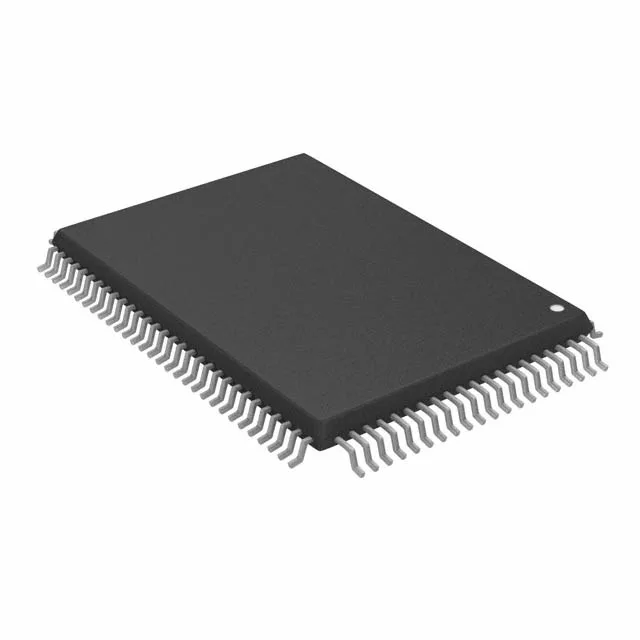
Package and rework — 100-LQFP on the bench
Tray packaging — the parts are seated in anti-static trays, not tape-and-reel. For hand assembly or rework, the tray keeps the leads straight; no carrier tape to cut.
Supply and temperature — industrial-grade reach
Runs on 3.135V to 3.6V — a standard 3.3V rail with 5% tolerance covers the high end; a 3.0V rail with 5% sits at 3.15V, which is 15 mV above the minimum. That's tight. If your board uses a 3.0V supply, check the regulator's accuracy over temperature and load before committing. Suitable for outdoor telecom cabinets, factory-floor controllers, and base stations that see seasonal extremes.
Lifecycle reality — Last Buy, plan the procurement
Marked Last Buy by Infineon. That means the manufacturer has announced the final production window — once the last shipment leaves the factory, no more units will be made. New designs should not use this part; existing BOMs need a last-time-buy quantity that covers the product's remaining service life plus spares. Because the part is in Last Buy, the available inventory is finite and lot-specific; a BOM line that depends on this SRAM should secure the required volume before the factory cutoff.