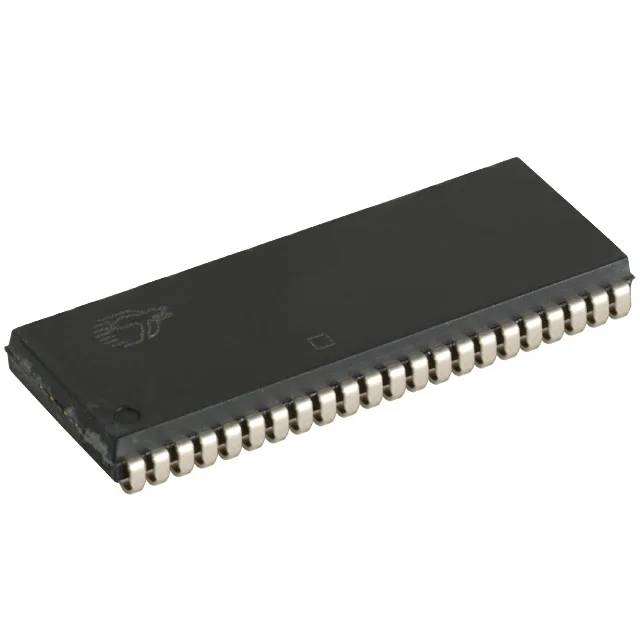
In a 50 MHz bus environment, a 10 ns access leaves roughly 10 ns of setup margin after accounting for address propagation and output hold — enough for most FPGA or ASIC memory controllers without inserting wait states. If your controller expects a faster part (e.g., 8 ns), this part will not meet setup; if it expects 12 ns or slower, the 10 ns part provides headroom.
4Mbit density and 256K x 16 organization
The 256K x 16 organization is a standard x16 word width, common in 16-bit microcontroller and DSP memory buses. The 4Mbit density suits applications needing moderate scratchpad or frame buffers — think Ethernet packet buffers, motor control lookup tables, or display line stores. The parallel interface is straightforward to route; no serial protocol overhead or configuration registers.
Industrial temperature grade and 5V supply
If your design has moved to 3.3V, consider the CY7C1041GE30-10ZSXI (3.0V version) instead, but note the package and footprint change.