For a 16-bit microcontroller or DSP running a 50 MHz bus clock (20 ns period), this part leaves a 10 ns window for address propagation, board trace delay, and setup time — enough margin for a clean single-cycle read without inserting wait states. At 66 MHz (15 ns period) the margin shrinks to 5 ns, which still works with careful layout and matched trace lengths.
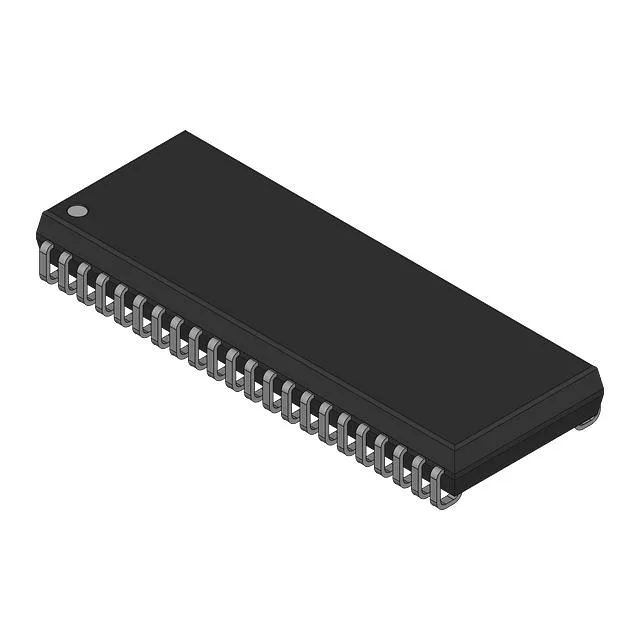
CY7C1021DV33-10ZSXA SRAM, 1Mbit, 10 ns, 44-TSOP II
MPNCY7C1021DV33-10ZSXA
Obsolete
Cypress CY7C1021DV33-10ZSXA, asynchronous SRAM, 1Mbit (64K x 16), 10 ns access time, parallel interface, 3V to 3.6V supply, -40°C to 85°C, 44-TSOP II, Tray.
$1.9167Ref. price · indicative, final on quote
Independent supplier — new & surplus stockAuthenticity-screened · ESD-safe packingListing updated Jul 2026
Specifications
| Parameter | Value |
|---|---|
| Memory type | Volatile |
| Mounting | Surface Mount |
| Supply voltage | 3V ~ 3.6V |
| Memory interface | Parallel |
| Operating temperature | -40°C ~ 85°C (TA) |
| Package | Tray |
| Technology | SRAM - Asynchronous |
| Access time | 10 ns |
| Memory size | 1Mbit |
| Memory format | SRAM |
| Case | 44-TSOP (0.400\", 10.16mm Width) |
| Memory organization | 64K x 16 |
| Write cycle time - word, page | 10ns |
Product details
Frequently asked questions
Is CY7C1021DV33-10ZSXA obsolete?
Yes, the lifecycle status is Obsolete. No official replacement is listed, but functionally identical alternatives in the same Cypress family exist — see the comparison FAQ below.
How does CY7C1021DV33-10ZSXA compare to CY7C1021DV33-10VXI?
The difference is the package and shipping medium: the -10ZSXA comes in a 44-TSOP II on Tray, while the -10VXI is in a 44-TSOP II on Tube. The die and electrical specs are identical, so the choice is purely a matter of preferred packaging for your assembly line.
Can I use CY7C1021DV33-10ZSXA with a 3.3V supply?
Yes.