4 Mbit FRAM at 50 MHz — the density and speed define the slot
The CY15V104QN-50SXI is a 4 Mbit non-volatile FRAM organized as 512 K × 8 bits, accessed over an SPI bus at up to 50 MHz. That clock rate puts it ahead of many serial EEPROMs and FRAMs that top out at 20 or 25 MHz — useful when the MCU's SPI peripheral can run at full speed and the firmware needs to log data without stalling the bus. The supply rail is 1.71 V to 1.89 V, a tight 1.8 V nominal band. The 1.8 V domain also means the SPI I/O levels are 1.8 V — the host MCU's SPI pins must tolerate or translate that.
Automotive grade and temperature envelope
This part carries the AEC-Q100 automotive qualification — it passed the stress tests for temperature cycling, ESD, and latch-up that qualify a memory IC for under-hood or cabin deployment. The ROHS3 compliance means no exemptions expiring; the part ships in tube packaging.
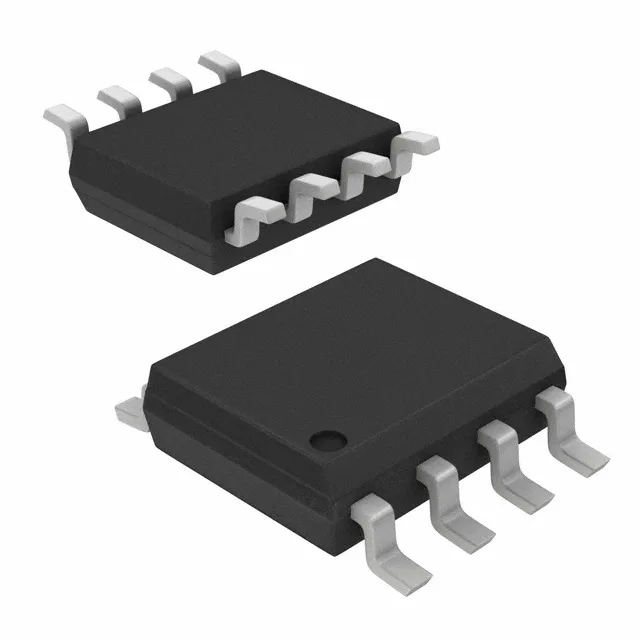
Housed in an 8-SOIC with a 0.209-inch (5.30 mm) body width — the standard narrow SOIC footprint. The 1.27 mm pin pitch is hand-solderable and rework-friendly; no micro-BGA or QFN alignment issues. The 8-pin SPI pinout (CS, SCK, SI, SO, plus VDD, VSS, and two no-connects) is common across many serial FRAMs and EEPROMs, so a board layout for a 25LC512 or similar often maps directly.
FRAM vs EEPROM — the endurance difference
FRAM writes without a page-erase cycle and has no wear-out limit at the bit level — unlike EEPROM or flash, which degrade after 100,000 to 1,000,000 writes per sector. For a data logger that writes every few seconds, FRAM eliminates the wear-leveling logic the firmware would need for flash. The trade-off is density: 4 Mbit is large for FRAM but small against a 64 Mbit serial flash.