Two ppm specs, two different decisions
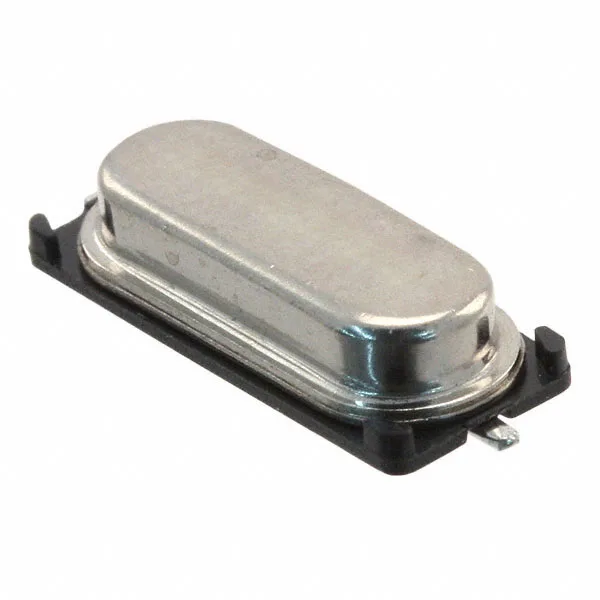
The ECS-270-20-5PVX: The ±30 ppm tolerance is what the crystal measures at room temperature at shipment — it tells you how close the actual frequency sits to 27.000000 MHz before any environmental shift. The ±50 ppm stability is the drift budget across temperature, aging, and board-level load variation. A design using the tighter ±30 ppm figure for its timing reserve is under-counting real-world drift: the stability spec is the number that governs whether your UART baud-rate error or CAN bus sampling window stays within tolerance over the product's operating life. At 27 MHz with a 20 pF load capacitance, the pullability — the frequency shift available from changing the load cap — is modest. If the oscillator circuit drives the crystal with excessive power, the crystal's effective ESR rises and the frequency pulls downward, compounding the stability budget. The 40 Ohm ESR on this part sets the upper bound on safe drive level.